Wedding Photography
Wedding Reception Flash Photography: How Dark Venues Get Lit
Direct, bounced and off-camera flash explained, how ceilings, uplighting and dark barns change reception photos, and the small choices couples make that help most.
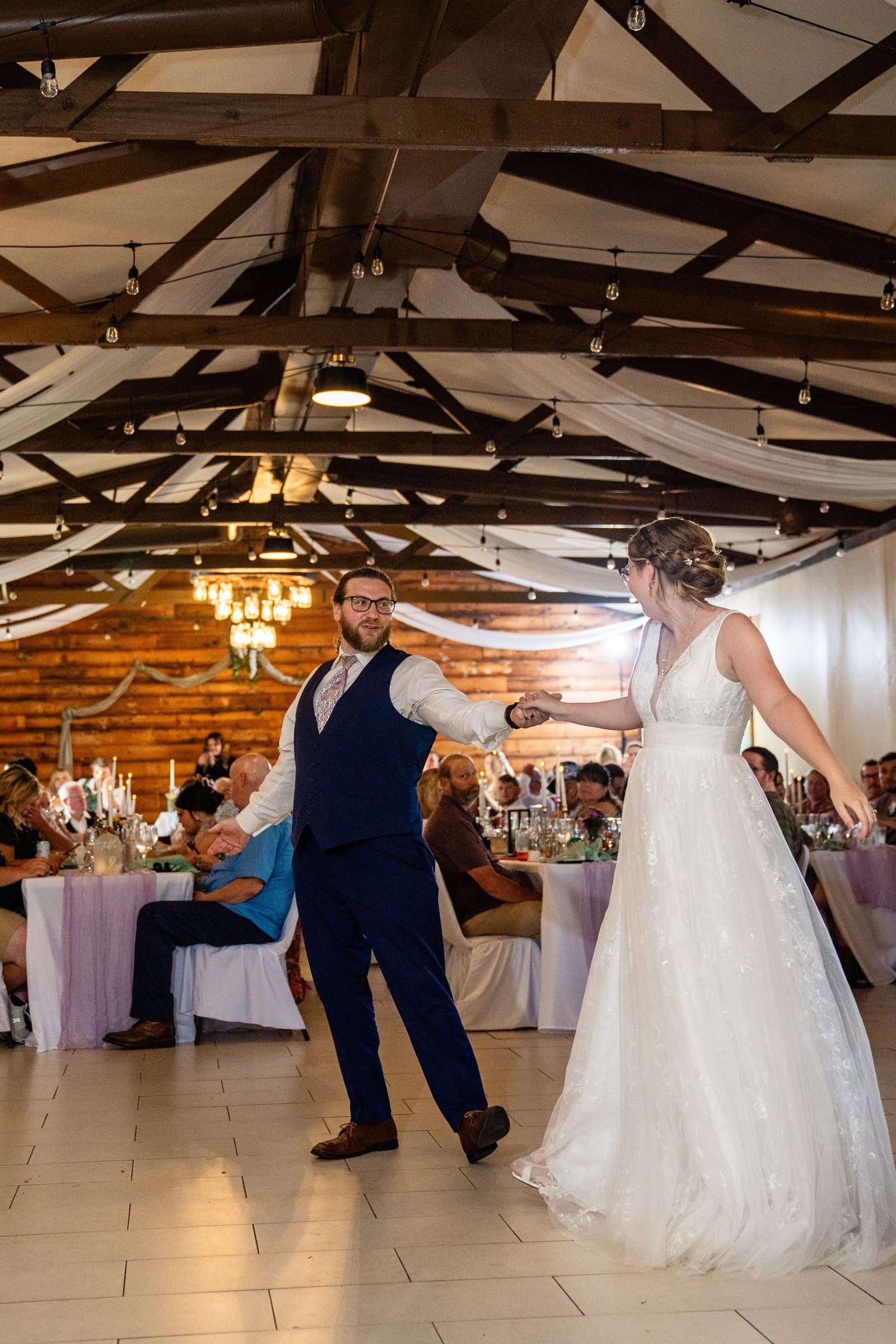
Nearly every wedding reception needs flash once the sun goes down, and how it gets used decides whether your photos look like the room felt or like someone switched on a spotlight in a cave. We bounce flash off the room by default, add lights on stands for the big moments, and keep the room's own glow from candles, string lights and uplighting in the frame. This guide covers how reception flash photography works and what couples can do to help it.
Why do wedding receptions need flash?
Reception rooms are lit for mood, not for cameras. A room that looks warm and bright to your eyes is often several times too dark for a sharp photo of people who are moving, laughing and dancing. Without added light, the choice is blur or grainy, muddy color.
Flash solves the sharpness problem because the burst of light is extremely short, much shorter than the shutter is open. That brief pop freezes people even when the camera is letting in the room's own light for a longer stretch.
That second part is the whole trick to reception photos that feel like the night. A photographer who sets the camera for the room first, and then adds just enough flash to light the people, gets both: sharp faces and a background that still glows. Photographers sometimes call this "dragging the shutter." Done the other way around, the result is well-lit faces floating in black.
Direct flash, bounced flash and off-camera flash
These are the three ways a flash can light a reception, and they look very different.
| Type | What it is | How it looks |
|---|---|---|
| Direct flash | Flash on the camera, pointed straight at people | Bright faces, hard shadows behind them, dark background. Punchy and a little paparazzi |
| Bounced flash | Flash on the camera, aimed at a wall or ceiling so the light spreads out before it reaches people | Soft, even light that looks close to natural |
| Off-camera flash | Lights on stands around the room, fired wirelessly from the camera | Light with direction and shape: glowing edges on the first dance, a lit dance floor, depth |
Bounced flash
This is our default for most of the evening. The flash points behind us and over a shoulder into the room, so a whole wall or corner becomes a very large, soft light source. Photographer Neil van Niekerk, whose writing on bounce flash at receptions is a standard reference, sums it up as bouncing the flash in the direction you want the light to come from. Aiming straight up at the ceiling is the version to skip, since light from directly overhead leaves eyes in shadow.
Bounce depends on the room. It needs something to bounce off, reasonably close and reasonably neutral in color.
Off-camera flash
For the first dance, toasts, cake cutting, the dance floor and the send-off, we add lights on stands. They go up during cocktail hour or dinner, get tested with a real person standing where the couple will be, and stay put for the night. A light placed behind the couple during the first dance gives them glowing edges against a darker room, and a light covering the area around the toasts lets us photograph both the speaker and the couple's reaction without a flash popping in anyone's face.
The stands sit at the edges of the room, out of the walkways. If you notice a light stand during dinner, that's why it's there.
Direct flash
Direct flash has become a popular look, especially the "editorial" style built around bright faces, hard shadows and nearly black backgrounds. It's a deliberate style choice some photographers build their whole reception look around.
We bounce instead. Our style is Classic with Heart, timeless over trendy, and straight-on flash is exactly the kind of look that dates a gallery to a particular year. Bounced and off-camera light keeps the color and warmth of your room in the pictures. If you love the direct flash look, the best way to find it is a photographer whose full reception galleries are shot that way. Our guide to wedding photography styles covers how to read a portfolio for style.
What decides how your reception photos look
Four things about the room decide the photos more than anything the camera does.
The ceiling
Height and color. A white or light ceiling under about twenty feet makes bounce easy. Barn rafters, tents, dark wood and very tall ceilings swallow bounced light, so in those rooms more of the evening runs on lights on stands. As one example, the octagonal reception barn at 1885 Farms in Navarre, where we've photographed, has 55-foot ceilings.
The color of the room
Light picks up color from whatever it bounces off. A beige hotel ceiling or golden barn wood warms every face, and a painted accent wall can tint skin its own color. Neutral surfaces keep skin tones honest.
The room's own light
Most reception rooms are lit with warm bulbs and candles, while flash is closer to daylight. Mixed carelessly, that gives neutral faces against an orange room. Photographers who work reception rooms regularly put a colored filter called a gel over the flash so it matches the warm room light (van Niekerk covers gelling flash for warm light in detail). Nothing here falls on the couple. The photos keep some of the room's warmth, because that is how the room looked.
Uplighting, string lights and DJ lights
Uplighting is the colored light washed up the walls from fixtures on the floor. It photographs well, and it stays the color you picked, since the flash is aimed at people rather than the walls. Warm amber and soft white look natural behind skin. Saturated purple, blue or red look bold, and they read as bold in the photos too.
String lights and candles are great for photos. They become soft points of light in the background. DJ dance lights add color and movement on the dance floor. Haze or fog machines make lights behind the couple beam dramatically, which is worth knowing about ahead of time since haze changes how the room lights.
How each reception moment is lit
The reception runs as an order of events rather than a clock, so these are in the usual order. Your DJ may run it differently.
- Grand entrance. Room lights often drop right before the doors open. The lights on stands are already up, so the entrance is lit as you walk through.
- First dance. Lights behind the two of you create the glow around your edges, with softer light on your faces. A spotlight from the DJ or venue works well with this.
- Parent dances. Same setup, no changes.
- Dinner. Flash comes down or off. Nobody wants a flash going off while they eat, and the quiet table candids look best in the room's own light.
- Toasts. The speaker and your reactions face opposite directions, so we light the whole area softly and photograph both.
- Cake cutting. Cake tables often end up in the darkest corner, pushed against a wall where a light throws hard shadows. A table a few feet out from the wall, somewhere near the room's light, photographs much better.
- Open dancing. A slower shutter picks up the swirl of lights and movement, and the flash freezes faces at the end of the exposure so the motion trails lead into people.
- Send-off. Sparklers light faces on their own, glow sticks and LED wands barely do, and flash fills the gap. Our sparkler exit guide covers the send-off.
A few minutes of night portraits outside, lit by one light behind you, can be a lovely break late in the evening. Blue hour, the short stretch after sunset when the sky turns deep blue, is the best time for them. Our golden hour and blue hour guide covers timing.
What about flash during the ceremony?
We photograph ceremonies without flash by default. It's the quietest part of the day, many churches and officiants don't allow flash at all, and modern cameras handle dim ceremony rooms well. Where flash is allowed, it's most useful for the recessional, once the ceremony is over.
Venue and officiant restrictions are worth passing along before the wedding: no flash, areas we can't stand in, a hard end time. For winter weddings, where the ceremony is often indoors and dark by late afternoon, our winter wedding guide covers planning around short daylight.
What couples can do for better reception photos
Most of this is small, and most of it is decided at the venue walkthrough.
- A photo of the reception room and its ceiling, if we haven't been there, or the venue's name so we can look it up.
- Any flash or lighting rules from the venue, church or officiant.
- Warm or soft white uplighting, if you are choosing a color and want the most natural look.
- Some light left on for the first dance. A spotlight, string lights or uplighting gives the photos a sense of the room. A completely black room means only the flash is lighting the scene.
- The cake table a few feet off the wall and out of the darkest corner.
- A heads-up about haze, fog or special effects the DJ plans to use.
- Coverage that runs into open dancing, if dance floor photos are high on your list. Package hours are on our investment page.
Questions to ask any photographer about reception lighting
- Can we see a full reception gallery from a dark venue, start to finish? Highlight reels hide inconsistency.
- How do you light a room with high or dark ceilings, like a barn or tent?
- Do you use direct flash, bounced flash, lights on stands, or a mix, and when?
- When do your lights go up, and where do they usually stand?
- How do you handle a ceremony venue that doesn't allow flash?
SLR Lounge's reception lighting tips for photographers are a good read if you want to understand the answers you get.
Frequently asked questions
Is flash photography allowed during a wedding ceremony?
It depends on the venue and officiant. Many churches don't allow flash during the service, and some limit where photographers can stand. We photograph ceremonies without flash by default, so a no-flash rule doesn't change much. Churches vary more than most couples expect, and our guide to church wedding photography rules in Ohio goes through what parishes commonly ask for.
Will flash ruin the mood of our reception?
Bounced flash and lights on stands are far less noticeable to guests than a flash aimed at them, and they keep the room's candles and string lights in the photos. During dinner the flash comes down or off entirely.
What is direct flash wedding photography?
Direct flash means pointing the flash straight at people from the camera. It creates bright faces, hard shadows and dark backgrounds, a look popular in "editorial" style galleries. We bounce and use off-camera lights instead for a more classic look.
Does uplighting look good in wedding photos?
Yes. Uplighting adds color and depth to the background and stays the color you chose. Warm amber and soft white look most natural, while saturated colors look bold in photos as they do in person.
How do photographers shoot in a dark barn or tent?
Tall or dark ceilings don't bounce much light, so most of the lighting comes from lights on stands placed around the dance floor and key spots. They go up during cocktail hour or dinner and stay put for the night.
Our portfolio is the best place to see how we photograph a wedding day, and we're always glad to talk through your venue's lighting.