Wedding Planning
First Look vs. Aisle Reveal: Which One Fits Your Wedding Day?
A first look moves portraits before the ceremony and gets you to cocktail hour. An aisle reveal keeps the surprise. Here is what each one does to your day.
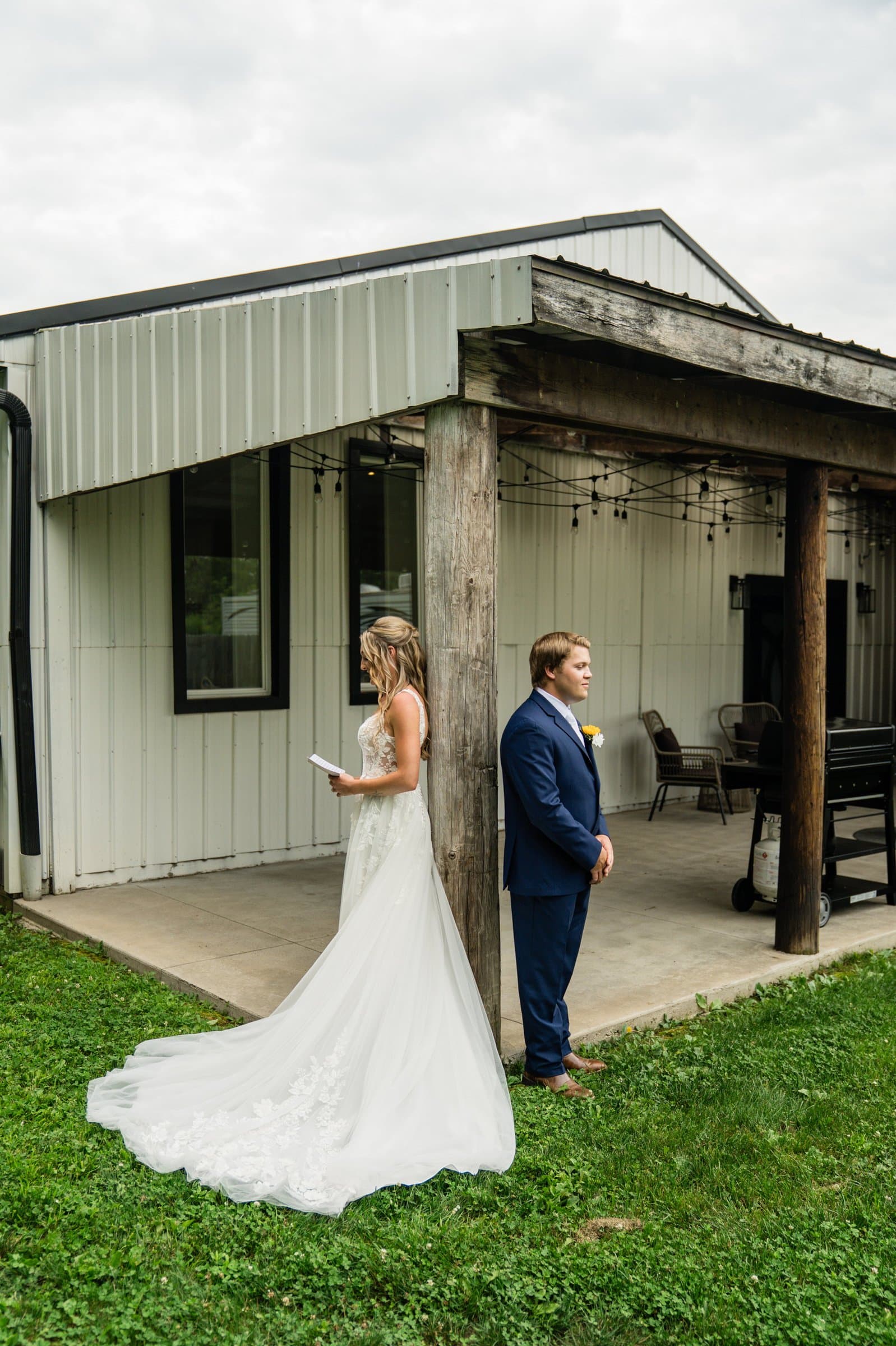
A first look means the two of you see each other privately before the ceremony, so most portraits happen early and you get to your own cocktail hour. An aisle reveal saves that first sight for the ceremony, which buys a later morning but moves every portrait into the hour after. If the aisle moment is sacred to you, we would build the day around it. If you are on the fence, we would lean toward the first look.
Both work, and we have photographed good versions of each. What changes is the shape of the whole day. Below is what each option costs in time, what happens during each one, and the in-between options most couples have not heard of.
How many couples do a first look now?
A little more than half. According to The Knot 2026 Real Weddings Study, more than half of couples married in 2025 saw each other before the ceremony, and first looks are up 14% since 2016. That study surveyed 10,474 US couples. The Knot's 2023 study put the figure at 56%.
So neither choice is the unusual one anymore. You will also run into numbers online like "couples with a first look spend 40% more time with guests." We could not trace that one to any published study, so we would leave it out of the decision.
What is a first look?
A first look is a planned, private moment before the ceremony when the two of you see each other dressed for the first time. It usually happens at or near the venue, somewhere out of sight of arriving guests.
Here is how it runs with us. We pick the spot ahead of time for even light and a quiet background: open shade, a covered porch, a room with a big window. One of you waits facing away. We tell the other where to walk and where to stop, and then it is a tap on the shoulder and a turn. We photograph the reaction from a distance, then pose you right there for a few frames together while the moment is still on your faces.
In our timelines the first look itself is about fifteen minutes. Couple portraits and bridal party photos follow straight after, so by the time guests arrive most of the portrait work is done.
A first look does not have to be with your partner, either. A first look with your dad, your mom, a grandparent or the bridal party is its own moment, and each one adds about fifteen minutes to the morning.
What is an aisle reveal?
The aisle reveal is the traditional version: the first time you see each other is when the doors open and one of you comes down the aisle. It happens in front of everyone, and both halves get photographed: the walk, and the face waiting at the front.
First look vs. aisle reveal at a glance
| First look | Aisle reveal | |
|---|---|---|
| First sight | Private, before the ceremony | At the ceremony, in front of guests |
| Hair and makeup | Starts earlier (about 30 minutes in our sample days) | Later, gentler morning |
| Couple and bridal party portraits | Before the ceremony | After the ceremony |
| Family formals | Right after the ceremony | Right after the ceremony |
| Cocktail hour | You are at it | You miss most of it |
| If the day runs late | Portraits are already done | Portrait time shrinks |
| Late fall and winter | Portraits in daylight | Portraits often after sunset |
One row surprises people. Family formals stay after the ceremony even on a first-look day, because that is the one moment the whole family is in one place and already gathered. Our family photo shot list guide covers how long they take and what order works.
How a first look changes your wedding timeline
On a day with a 4:00 ceremony, the difference comes down to where about ninety minutes of portraits land.
- With a first look: the first look, couple portraits and bridal party photos happen between about 2:00 and 3:30. After the ceremony, only family formals are left, and you walk into cocktail hour around 5:00.
- Without a first look: the morning can start about half an hour later, but family formals, bridal party and couple portraits run back to back after the ceremony, and most of cocktail hour happens without you.
That is why a short cocktail hour is the first thing we check on a no-first-look day. Both versions of the same day, block by block, are in our wedding photography timeline guide.
The case for a first look
A private moment before the day gets loud. The ceremony is shared with everyone you invited, and the average wedding in The Knot's 2026 study had 117 guests. A first look is the part with nobody watching except the people photographing it.
Nerves settle. Seeing each other early takes the edge off the wait. Most couples walk into the ceremony noticeably calmer.
You attend your own cocktail hour. With portraits done early, family formals are the only thing between the recessional and your guests.
More room when something runs late. Hair and makeup running long is the most common reason a photo schedule gets squeezed. With a first look, a late ceremony cuts into buffer time instead of your portraits.
Daylight in the colder months. This is the Ohio-specific one. In Norwalk, sunset in mid-November is around 5:15 once the clocks change. A 4:00 ceremony without a first look puts couple portraits right at or after sunset. With a first look, they happen in daylight. Our guide to choosing a ceremony start time in Ohio has sunset times by month.
What it costs: an earlier start to hair and makeup (about half an hour in the samples above), likely a touch-up before the ceremony, and the surprise happens privately instead of at the aisle. Our getting-ready guide covers how to pace that morning.
The case for an aisle reveal
The first sight happens in front of everyone. Your parents, your friends and your partner all see you at the same moment. For a lot of couples that shared reaction is the whole point.
Tradition and faith. If waiting connects you to how your parents and grandparents did it, or to your faith community, that is reason enough.
A later, easier morning. Getting ready can start later, and nobody is rushing to be fully dressed by early afternoon.
What it costs: you will miss most of your cocktail hour, the schedule after the ceremony is less forgiving if anything runs behind, and in November through February the light is often gone before couple portraits start. Flash and indoor portraits handle that well, but the look is different from daylight.
In-between options
The choice is less binary than it sounds.
- A first touch. You stand on either side of a door, a wall or a tree and hold hands without seeing each other. You can talk, pray or read letters. We plan about twenty minutes for it, and the aisle reveal stays intact.
- Private vows. Some couples read personal vows during a first look or a first touch. Writing and planning those is its own topic, covered in our private vows guide.
- A first look with a parent or the bridal party only. You keep the aisle reveal with your partner and still get a private moment with your dad or your friends, about fifteen minutes each.
- Keeping apart, but shooting early. On a no-first-look day, each side's bridal party photos and any family groupings that do not include both of you can happen before the ceremony. That shortens the list cocktail hour has to carry.
Religious and cultural traditions
Some traditions already have a moment like a first look built in. In many Ashkenazi Jewish weddings, the badeken (veiling) happens just before the chuppah, when the groom covers the bride's face with her veil. Whether a separate first look earlier in the day fits alongside it is a good question for your rabbi.
For church ceremonies, a first look usually happens away from the sanctuary and does not touch the service itself. It is still worth asking your parish or officiant early, both about their view and about any rules on photography inside the building.
How to decide
These are the questions that settle it for most couples:
- Have you pictured the doors opening for years? Then we would keep the aisle reveal and plan a cocktail hour long enough to carry the portraits.
- Is your cocktail hour under an hour? Without a first look, that is very tight. We would lean toward the first look, or toward shooting each side's photos before the ceremony.
- Is your wedding between November and February, or is your ceremony within about ninety minutes of sunset? A first look keeps your portraits in daylight.
- Does being emotional in front of a crowd make you freeze? A first look gives you that moment without an audience.
- Is your family list long? Formals happen after the ceremony either way, so a first look frees the rest of cocktail hour for them.
- Still on the fence? We would lean toward the first look. Nobody has ever told us they regretted twenty quiet minutes together in the middle of the loudest day of their lives.
Frequently asked questions
Does a first look take away from the ceremony?
It changes the ceremony moment rather than removing it. The outfit is no longer a surprise, but the music, the walk and everyone standing up are all still new. Plenty of couples who had a first look still tear up at the front.
How long does a first look take?
About fifteen minutes for the first look itself. Couple portraits (about 30 minutes) and bridal party photos (about 30 minutes) usually follow straight after, which comes to roughly an hour and a quarter before guests arrive.
Do we still do family photos after the ceremony if we have a first look?
Yes. Family formals stay after the ceremony because that is when everyone is already in one place. With a first look, they are usually the only photos left before cocktail hour.
Can we do a first look with a parent instead?
Yes. A first look with your dad, mom, a grandparent or your bridal party works the same way, and you can have more than one. Each adds about fifteen minutes to the morning.
When do we need to decide?
Before hair and makeup times are locked, because a first look moves the morning earlier. Timeline assistance is included with every package, so the decision can be talked through before your schedule is set.
If you are still weighing it, ask us anything. We are glad to sketch both versions of your day so you can see them side by side.