Wedding Planning
Golden Hour Wedding Photos: How the Sunset Portrait Break Works
What golden hour is, why the sunset portrait break at your reception lasts about 20 minutes, how it fits the evening, and what happens on cloudy days and at blue hour.
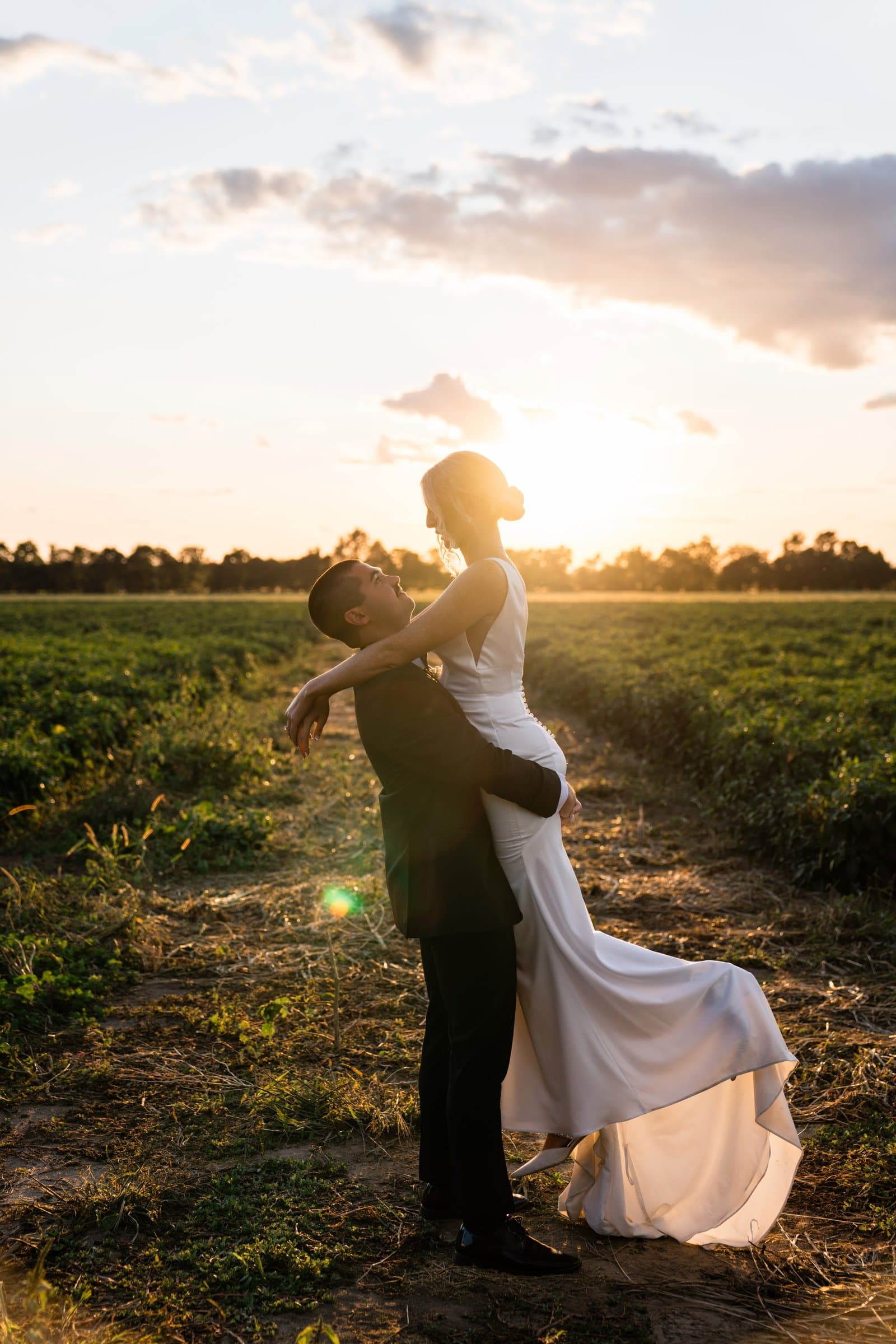
Golden hour wedding photos are a short portrait break during your reception: about 15 to 20 minutes, starting roughly half an hour before sunset. We step outside with the two of you once the grand entrance, first dance and dinner are underway, pose you in the low, warm light, and have you back inside before the dance floor gets going.
It's the one part of the evening the light decides instead of the DJ. Below: what golden hour is, why the break is shorter than the name suggests, how those 20 minutes go, and what we do when the sky doesn't cooperate.
What is golden hour?
Golden hour is the stretch around sunset when the sun is low in the sky. Photographers usually define it as the time when the sun sits between about 6 degrees above and 4 degrees below the horizon, which is how timeanddate.com describes it. The light comes in from the side instead of from overhead, so it lights faces from the front instead of dropping shadows into eye sockets. It's warmer in color and softer, and when we put the sun behind you, it outlines hair, veils and shoulders.
Why the break is 20 minutes, not an hour
In our part of Ohio, the sun takes only about 35 to 45 minutes to drop from 6 degrees above the horizon to sunset. We worked that out for Norwalk using NOAA's solar equations: on June 15, 2027 the sun reaches 6 degrees at about 8:24 and sets at 9:05, and on October 15 it's 6:13 and 6:50. The best of it for portraits is the last half hour before the sun reaches the trees or the horizon, so we start about 30 minutes before sunset and shoot for 15 to 20. Sunset times for every month are in our guide to choosing a ceremony start time in Ohio.
When does the golden hour break happen?
On our timelines, the reception runs as an order of events rather than a clock: grand entrance, first dance, parent dances, dinner, toasts, cake, open dancing. Golden hour is the exception. It keeps a time, and it gets pulled out of that order wherever sunset falls.
Most often it falls after dinner and before, or just into, open dancing. On a late-September day with a 6:00 reception and a sunset near 7:30, that's around 7:00. In June it's closer to 8:35, so coverage has to last that late. How the break fits the rest of the day is in the full wedding photography timeline guide.
If toasts or cake cutting are scheduled for right around sunset, a small nudge (toasts during dinner, cake after you come back) usually keeps everything in.
How the 20 minutes go
We come find you a few minutes ahead, and we already know where we're going, because we look at the spot and the direction of the sun before the reception starts. Then it's the same as your other portraits: we pose you and direct you the whole time. Where to stand, where your hands go, which way to look, when to walk.
A typical break goes something like this:
- A walk together toward the light, a few steps at a time
- Close, quiet frames with the sun behind you
- A wider frame with the sky or field in it
- A last few with the light low and orange, if there's time
The honest moments in between setups, like a laugh when a heel sinks into the grass, end up in the gallery too.
Close beats far
The best golden hour spot is usually the nearest open view to the west, not the prettiest spot on the property. A 20-minute block with a five-minute walk each way is 10 minutes of photos. Tree lines and buildings also block the low sun earlier than the official sunset time, which is another reason we check the spot in advance.
Which way the sun sets changes with the season
Near the summer solstice, sunset in northern Ohio is well to the northwest, at about 302 degrees on the compass. By mid-October it's west-southwest (about 259 degrees), and in late December it's southwest (about 238). At a Lake Erie venue, that swing can decide whether the sun goes down over the water or over land, so we check the direction for your date, not just the time.
Who should know about the break?
Three people make it easy:
- Your DJ or band, so nothing that needs you gets scheduled in that window and the music keeps going.
- Your coordinator or venue contact, especially if the spot is behind a door that's normally locked or down a path guests don't use.
- Your wedding party, so nobody goes looking for you.
The break is short, and it's placed at the point in the evening when the room needs you least.
What if it's cloudy?
We still go out. Northern Ohio gets plenty of gray evenings, less in summer than winter. For Sandusky, Weather Spark's historical data puts the clearer part of the year between about May 30 and November 10, with August the clearest month (clear or partly cloudy 67% of the time) and January the cloudiest (overcast or mostly cloudy 66% of the time).
Under clouds, the light is even and soft, with no squinting and no hard shadows. It isn't as warm or as glowing as a clear sunset, and under thick cloud it fades earlier, so on an overcast day we may pull you out 10 or 15 minutes sooner than planned. Sometimes the clouds break right at the horizon and the last few minutes are the best of the day.
Rain is its own plan. A covered porch, a big doorway or clear umbrellas can all work, and our rainy wedding photos guide covers the backup options.
What is blue hour?
Blue hour comes after sunset, when the sun is roughly 4 to 6 degrees below the horizon and the sky turns deep blue (timeanddate.com's definition). In Norwalk, that window starts about 20 minutes after sunset and lasts only about 12 to 15 minutes. It's too dark for natural-light portraits, so we add flash and put the blue sky behind you, often with string lights, a lit barn or a tent glowing in the background. It works well as five extra minutes at the end of a golden hour break, or as a separate quick step outside. How we light those frames is covered in our reception flash photography guide.
When golden hour doesn't fit the day
- Winter. After the clocks fall back in November and through January, sunset in our area is between about 5:00 and 5:45, which often lands during family photos or cocktail hour. Portraits before the ceremony with a first look usually make more sense, and the winter wedding guide covers the rest.
- Coverage that ends before sunset. From early June to mid-July, sunset is after 9:00, so an earlier ceremony with a shorter day can end before the light gets good. A later ceremony or a 10-hour day usually reaches it. Coverage options are on the investment page.
- Venues with no western view. Downtown streets and wooded lots lose the sun early. We'd scout the nearest open spot, or plan a night portrait with flash instead.
A few practical things
- Bug spray works best put on before you head out, not in the field. Evenings near water and tall grass are buggy in summer.
- Flat shoes or bare feet are easier in grass and gravel.
- A veil taken off after the ceremony is worth putting back on for this. Backlit tulle is one of the best things golden light does.
- Lakefront wind picks up in the evening. We keep veils and hair turned so the wind moves them away from your face.
Frequently asked questions
How long do golden hour photos take at a wedding?
About 15 to 20 minutes. Any longer and the light is usually gone. Walking time to and from the spot comes out of that, so a nearby spot means more photos.
What time should we do sunset photos?
About 30 minutes before sunset for your date and town. For a mid-September wedding in North Central Ohio, that's around 7:10; mid-June, around 8:35.
Will our guests notice we're gone?
A few might. The break usually happens after dinner, when people are talking, getting drinks or heading to the dance floor, and your DJ keeps the room going. Your wedding party knows where you are.
Can we do golden hour photos if it's cloudy?
Yes. Overcast light is soft and flattering, just cooler and less glowing. We may start a little earlier, since the light fades sooner under heavy cloud.
Is golden hour worth leaving our own reception?
It's your call, and we'll build the day either way. It's the only portrait time of the day in that light, and it's 20 minutes placed where the reception needs you least.
Next step
If you're a little nervous about more portraits, the camera-shy couples guide covers how we pose and direct. And if you'd like us to find the golden hour window for your date and venue, send us the details.