Wedding Planning
Wedding Family Photo List: Groupings, Order and How Long It Takes
Family formals run about two minutes per grouping with a written list and a wrangler per side. A starting list, the order that saves time, and how to plan around divorced parents.
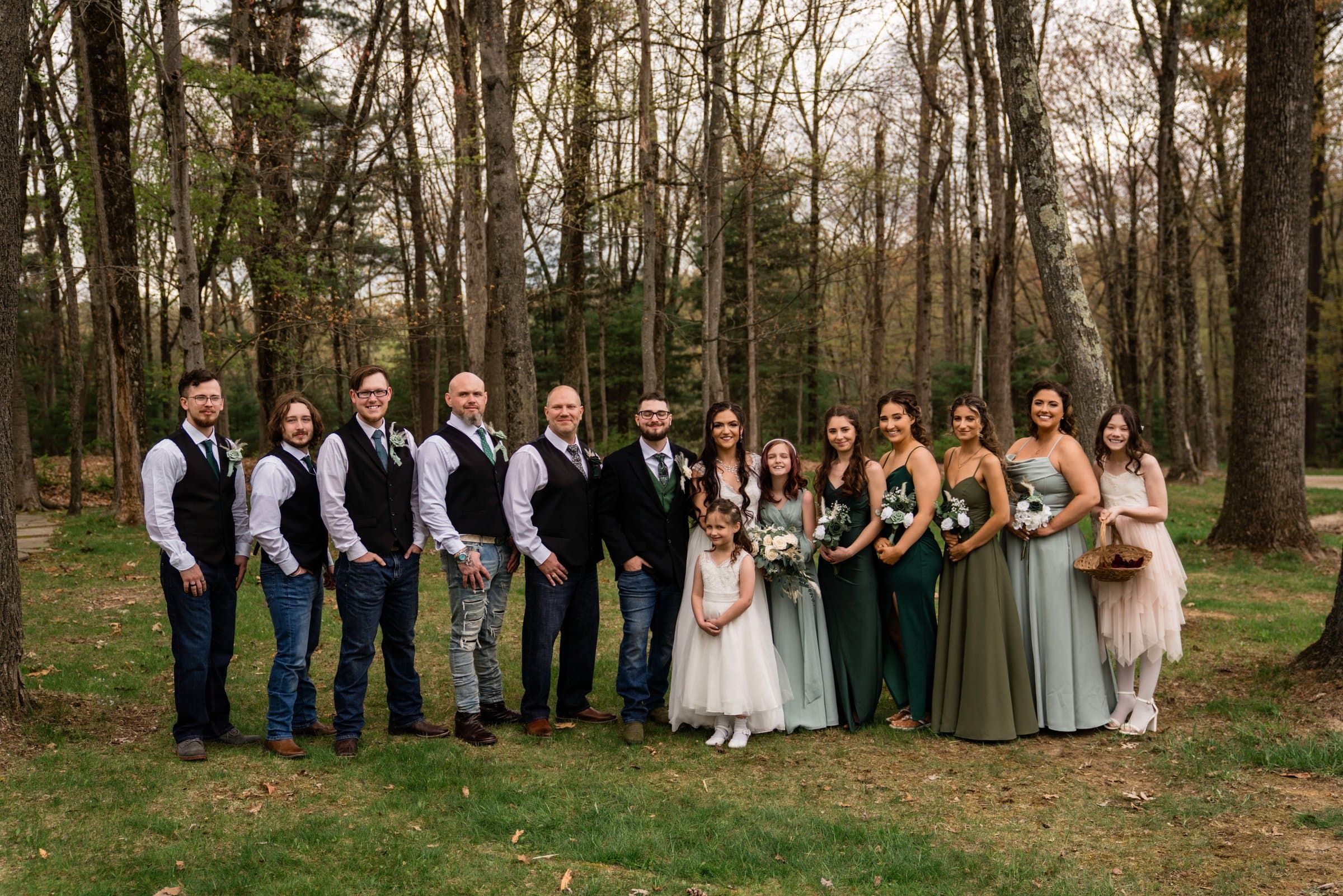
Family photos take about two minutes per grouping when there is a written list and a wrangler on each side. Eight groupings is roughly twenty minutes, and fifteen is about half an hour. They happen right after the ceremony, even if you do a first look. Below is a starting family photo list, the order that keeps things moving, and how to plan around divorced parents, grandparents and big families.
Family formals are the one part of the day where the two of you mostly stand still while everyone else moves. How fast they go depends almost entirely on what happens before the wedding: the list, who knows they are on it, and who is calling names.
How long do family photos take?
Two minutes per grouping is the shooting time. What stretches a formals block is everything around the shooting: calling the next group, getting them into place, and waiting on whoever wandered toward the bar. On a short, simple list that overhead mostly disappears. On a long one, or one where whole families rotate in and out, it adds up.
| Groupings | Shooting time | Block we would plan |
|---|---|---|
| 8 | 16 minutes | About 20 minutes |
| 12 | 24 minutes | About 25 to 30 minutes |
| 15 | 30 minutes | About 35 minutes |
| 20 or more, several families rotating | 40+ minutes | An hour or more |
That last row comes from experience. On one wedding this year, a list of twenty-one groupings was about forty-two minutes of shooting and needed a full sixty-minute block. The extra time was five changeovers between families and one swap of the couple, at roughly three minutes each. When a list has multiple families to rotate (divorced parents, both sides present, anyone who has to be seated), we plan changeovers on top of the two minutes per grouping.
For comparison, Zola's photography timeline guide suggests about 30 minutes for close-family portraits and keeping formal groupings to around 15. That lines up with our numbers.
When do family formals happen?
Right after the ceremony, in almost every wedding we plan. That is the one moment the whole family is in one place, dressed, and already gathered near the ceremony space.
The same goes for a first-look day. The first look moves couple portraits and bridal party photos before the ceremony, but family formals stay after it. The practical difference: with a first look, formals are the only photos left before cocktail hour. Without one, formals come first in a stretch of about ninety minutes that also includes bridal party photos and couple portraits. Our first look vs. aisle reveal guide compares the two days side by side.
The long-list option: splitting formals around the ceremony
When a family list runs past about twenty-five groupings, or when there are divorced parents to sequence and cocktail hour is only an hour, we would split the list by who is in the frame. Groupings with only one of you (one partner with their mom's side, the other with their grandparents) happen before the ceremony. Groupings with both of you happen after. On a long list that can roughly halve what cocktail hour has to carry.
It comes with three costs. Staying out of sight of each other takes separate buildings or one spot used in turn. Family members have to be dressed and on site well before the ceremony, which is the part that most often breaks, so it helps to put call times in writing early. And the list runs best with someone calling names who is not also posing people.
A starting family photo list
This is the eight-grouping list we suggest to couples as a starting point. Partner A and Partner B stand in for your names.
- Couple with both sets of parents
- Couple with Partner A's parents
- Couple with Partner A's immediate family (parents, siblings, siblings' spouses and kids)
- Couple with Partner A's grandparents
- Couple with Partner B's parents
- Couple with Partner B's immediate family
- Couple with Partner B's grandparents
- Couple with all siblings
Common additions, each about two more minutes:
- Each of you with your own parents, without your partner
- Couple with each parent individually
- Couple with aunts, uncles and cousins from one side
- Couple with godparents or a family friend who is family in every way that counts
- Siblings only, for families who never get a photo of just the kids
Immediate family and grandparents on the formal list works well. Everyone else is still photographed during the reception, where people are relaxed and already at their tables. Lists usually start at eight and arrive at twenty, so the total is worth a look against your timeline each time something gets added.
What order works best?
Order is where most of the time gets saved. The goal is to move as few people as possible between shots.
- Grandparents and small children first. Anyone who tires quickly, needs a chair, or has a nap coming goes at the start, then they are free to head inside.
- One side at a time. Finishing Partner A's family before starting Partner B's means one big changeover instead of several.
- Largest group first within each side. The full immediate family comes first, then people peel away: siblings step out, then it is just parents, then each parent. Building up from small to large means hunting for people who already left.
- Combined groupings at the hinge. "Both sets of parents" and "all siblings" work best right at the switch between sides, when both families are standing nearby.
Here is how the starting list above might run in that order: Partner A's grandparents, Partner B's grandparents, Partner B's immediate family, Partner B's parents, both sets of parents, all siblings, Partner A's immediate family, Partner A's parents. If you send your list, we will put it in order for you as part of building the timeline.
Who goes on the family photo list?
A few decisions come up at nearly every wedding:
- Real names, not roles. "Aunt Denise and Uncle Rob" gets called out loud and people come. "The aunts" gets a pause while everyone looks around.
- Boyfriends and girlfriends. Many couples do one version of a sibling's family photo with a newer partner and one without. It costs two minutes and settles the question for good.
- Anyone who can be photographed later. Cousins, college friends and coworkers are easier to catch during the reception than to fit into formals.
- Heads-up in advance. Everyone on the list knowing to stay near the ceremony space right afterward is the difference between a quick block and a search party. An unplugged ceremony helps here too, since it keeps the aisle clear and people are not stopping to text photos.
The family wrangler
A wrangler is one person per side who knows everyone by name and is comfortable raising their voice. They hold a copy of the list, call the next group before the current one is done, and keep hold of anyone who is needed again later.
The best wranglers are usually an aunt, an older cousin or a sibling who is not in the bridal party. Bridal party members are in photos too, and they get pulled in five directions. A photographer does not know your family by sight, so the wrangler is the one who can pick Uncle Rob out of a crowd.
About two weeks before the wedding, we ask for the finished list with real names, plus both wranglers' names and cell numbers. If you can send your list then, we bring it printed.
Divorced parents and blended families
This comes up often, and it is simpler than couples expect.
Divorced parents go in separate groupings, with no explanation needed. We handle that quietly, and it reads as part of the normal sequence. If your parents get along and want a photo together, add it to the list. If they do not, nobody has to discuss it on the day.
Step-parents are your call. Some couples include step-parents in every parent grouping. Others do a grouping with each parent and their spouse, then one with the parent alone. A common sequence for divorced, remarried parents on one side:
- Couple with Mom and her spouse
- Couple with Mom
- Couple with Dad and his spouse
- Couple with Dad
- Couple with siblings and step-siblings
Every rotation between households is a changeover, so a divided family on both sides is exactly the kind of list where we plan extra minutes on top of the two per grouping.
If there is anyone who should not be placed next to someone else, or a recent loss in the family you would like handled gently, a heads-up before the day is enough. It goes into our notes, not onto the list your wrangler is holding.
Grandparents, kids and anyone who needs a chair
- Chairs at the spot for grandparents or anyone who cannot stand for long, set out before the ceremony ends.
- Shade in summer. Ohio heat and humidity in July and August are hard on older guests standing on a lawn. The CDC notes that adults 65 and older are more prone to heat-related illness, so an evenly shaded spot close to the ceremony helps everyone.
- Small kids early, with a parent ready to step in and a snack nearby.
- A heads-up on mobility for anyone who needs extra time to get into place, so the order can put them first.
Where do formals happen?
As close to the ceremony as possible. Walking forty people across a field before photographing them loses half of them along the way. The best spots have even light or open shade, a background wide enough for your largest group, and ideally a few steps, which make big groups much easier to arrange.
In a church, formals often happen at the front of the sanctuary right after the recessional. It is worth asking your parish how long you have the space and whether there are photography rules. For fall ceremonies that end close to sunset, formals may move indoors or use flash, and our ceremony start time guide covers how sunset shapes that choice. If weather could push formals inside, the backup spot belongs in your rain plan.
Frequently asked questions
How many family photo groupings should we plan?
Eight to fifteen covers most families. Eight is about twenty minutes and fifteen is about thirty-five, including changeovers. Past twenty, it is worth looking at splitting the list around the ceremony.
Do family photos happen before or after the ceremony?
After, in almost every case, even with a first look, because that is when the whole family is already gathered. The exception is a very long list, where groupings that include only one of you can happen before the ceremony. Wedding party photos are a separate block again, and they work on different math.
How do you handle divorced parents in wedding photos?
Divorced parents are photographed in separate groupings by default, with no explanation needed. If they are comfortable together and you want that photo, it just goes on the list.
Do boyfriends and girlfriends go in family photos?
That is up to you, and a lot of couples split the difference: one photo with the newer partner and one without. It adds about two minutes.
What about one big photo of the whole extended family?
It is usually easier during the reception than during formals. It needs an announcement from the DJ and a spot with some height or a few steps, and it takes a few minutes to gather everyone.
Your family formals list becomes part of the finished timeline we send before the wedding, ready to forward to your planner, venue and both families. Timeline assistance is included with every package, so if you want help sorting out who goes where, send us whatever you have.