Wedding Planning
Unplugged Wedding Ceremony: Sign Wording and How to Ask Guests
What an unplugged ceremony is, why photographers recommend it, and ready-to-use wording for your sign, wedding website and officiant, plus what to do about the guest who films anyway.
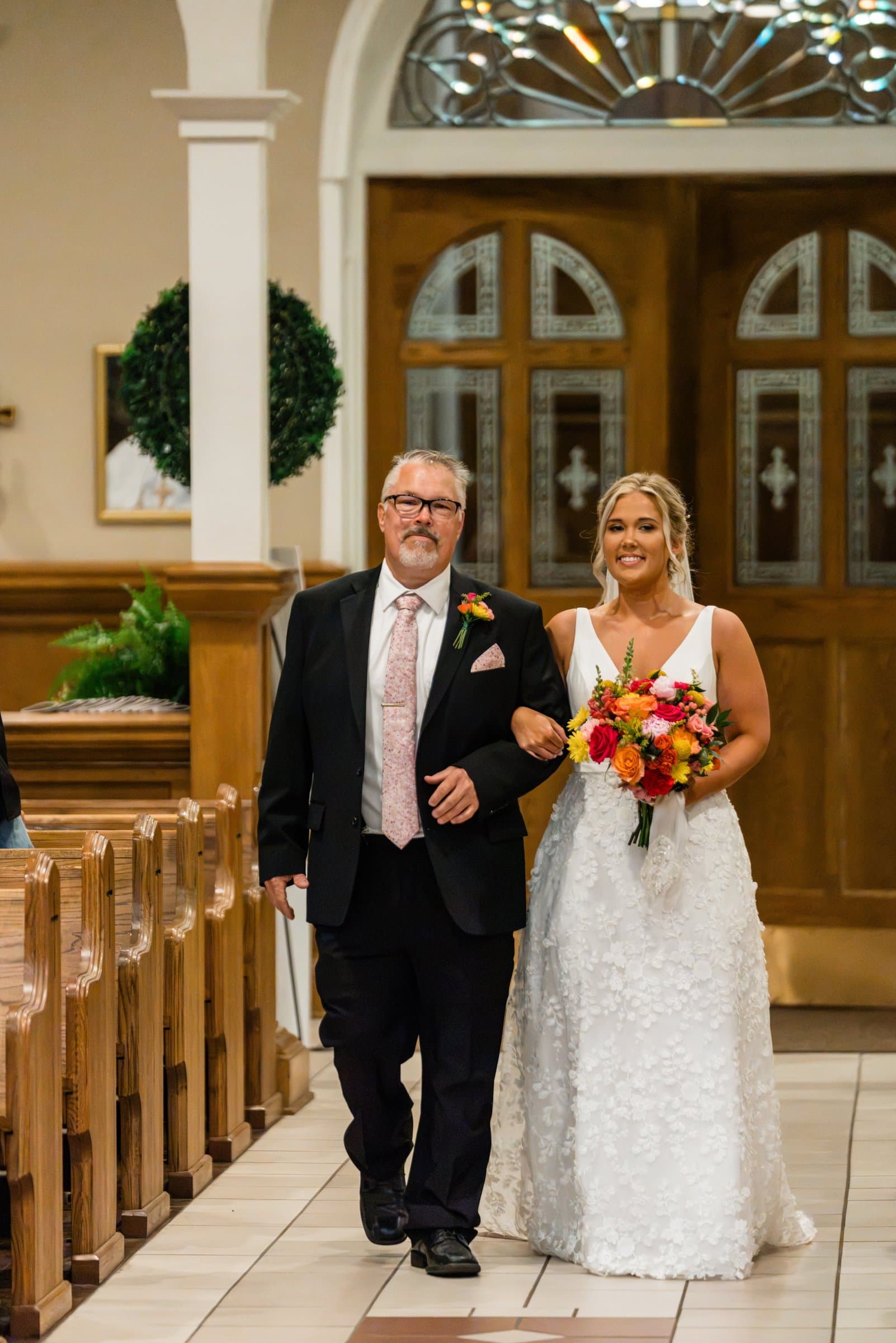
An unplugged wedding ceremony means asking guests to keep phones, tablets and cameras put away from the processional until you walk back down the aisle. The request works best in two or three places, and the one guests really hear is a short announcement from your officiant right before the ceremony starts. Phones come back out for the rest of the day.
It is also common now. In The Knot's 2023 Real Weddings Study of couples married in 2022, 45% had an unplugged ceremony, up from 2017. The Knot's 2025 study found 62% of Gen Z couples and 54% of millennials favored unplugged ceremonies. Below is why photographers recommend it, wording you can copy, and how to handle the guest who films anyway.
What does an unplugged ceremony include?
Usually just the ceremony: the processional, vows, rings, the kiss and the recessional. Cocktail hour and the reception stay fully plugged in, and guests can photograph and post all they like.
We recommend one small extension: phones down during family formals too. Formals run on getting each grouping in place, everyone looking at the same camera, and moving to the next. When relatives are also taking their own photos from beside the photographer, heads turn in two directions and each grouping takes longer. Our family formals guide covers how that block works.
Why photographers recommend an unplugged ceremony
Phones end up in the photos you are paying for. Specifically:
- The aisle. The processional and recessional are photographed straight down the aisle. That is exactly where guests lean out with phones held up, and an arm in the aisle is part of the photo.
- Faces versus screens. Wide shots of the ceremony show your guests. With an unplugged ceremony, that means faces watching you. Without one, it is often a row of phone backs.
- Flash. Phones fire their flash in dim rooms, and churches and barns are often dim. A guest's flash can go off at the same moment as a professional frame and wash it out.
- Guests in the way. A guest who steps into the aisle for a better angle during the vows is standing where a photographer planned to be.
That last point matters more in churches. Many set their own rules for photographers. Catholic Wedding Help's summary of parish rules lists common ones: no flash during the ceremony, no photographers in the sanctuary, and limits on moving during key parts of the liturgy. Those rules vary a lot from parish to parish, and in our experience the officiant often sets them on the day. When photographers are restricted to a few spots, a tablet raised in the wrong row can block one of the only angles available. With two photographers on every wedding we cover more than one angle, but the aisle is still the aisle.
There is a guest-side benefit too. People watching through a screen are thinking about framing and whether the video is recording. An unplugged ceremony gives everyone permission to just watch.
Is an unplugged wedding rude?
Not when it is asked kindly and kept short. Most guests are relieved to be told a professional has it covered. Where it gets tricky:
- Family who can't attend. If a grandparent is watching from home, a livestream solves it. One person, one phone on a small tripod, placed with your photographers before guests arrive, is far less intrusive than twenty phones.
- Traditions where guests filming is part of the celebration. In some families and cultures it is expected, and a strict unplugged rule can land badly. A partial version (below) can respect both.
- Very small weddings. With fifteen guests, a gentle mention is usually plenty.
How to announce an unplugged ceremony
No single notice reaches everyone. These work well together, roughly in order of how much they do:
- The officiant's announcement, right before the processional. This is the one that works, because it arrives at the exact moment phones would come out.
- A sign at the ceremony entrance, where guests see it on the way to their seats.
- A line on your wedding website, so guests know ahead of time.
- A heads-up to parents and the wedding party. Close family set the tone for their rows, and they are the people other guests watch.
- A line in the ceremony program, if you have one.
Unplugged wedding sign wording
A few options, from warm to direct. All of them are free to borrow and change.
- "Welcome to our unplugged ceremony. Please put away your phones and cameras and be here with us. Our photographers have it covered, and we promise to share."
- "We invite you to be fully present. Please silence and put away all devices until after we say I do."
- "The best seat in the house is the one without a screen in front of it. Phones away for the ceremony, please."
- "This is an unplugged ceremony. No photos or video, please. The photos will be shared after the wedding."
- "Please turn off your phones and cameras for the ceremony. Snap away at the reception."
- "Our photographers are handling the photos. We'd love to see your faces, not your phones."
A short sign gets read. A paragraph gets skipped on the way to a seat.
Officiant script for an unplugged ceremony
The officiant's version works best short and warm, said once everyone is seated and before the music starts. Two versions:
"Before we begin, the couple has one request. They would love for you to be fully present with them today, so please take a moment to silence your phones and put them away. Their photographers are capturing everything, and the couple will share the photos with you after the wedding. Thank you."
"Welcome, everyone. This is an unplugged ceremony, so please put phones and cameras away until the recessional. After that, take all the pictures you want."
It is worth sending the officiant the wording ahead of time. Some already include a phones announcement in their standard opening; others will be glad to have it written out.
Wording for your wedding website
Website language can do a little more explaining, since guests read it at home:
"We're having an unplugged ceremony. We'd love for you to put phones and cameras away until we've walked back down the aisle, so you can enjoy it with us. Our photographers will capture the ceremony, and we'll share photos after the wedding. Once the reception starts, snap away."
If you would also like guests to wait before posting on social media, the website is the place to say so: "We'd love for you to share your photos, but please wait until we've posted our first ones."
What if guests ignore the unplugged request?
A few will. Usually it is someone who arrived late, missed the sign and did not hear the announcement. A few ways to keep it low-stress:
- One named person handles it. An usher, coordinator or trusted friend who can give a quiet "they've asked for phones to be put away" during the processional. Not either of you, and not the photographers.
- One quiet reminder, and that's it. A light touch goes over better than a scolding at a wedding.
- A stray phone or two is fine. Photographers work around a stray phone by adjusting angle and framing. It is a large group of phones in the aisle that can't be worked around.
Options between fully plugged in and unplugged
Some couples want something in the middle. These all work:
- A phone moment at the end. The officiant introduces you as a married couple, you pause at the front for a few seconds, and guests are invited to grab one photo before the recessional. Then phones go away and you walk.
- One livestream, placed with care. One device, set up before the ceremony somewhere agreed with your photographers.
- Phones welcome at the reception. Guest photos from the dance floor are fun. A shared album link or QR code on the tables collects them in one place.
If you are doing an aisle reveal rather than a first look, the unplugged ceremony protects that first moment in particular. Our first look vs. aisle reveal guide covers how each option shapes the day, and the wedding photography timeline guide shows where the ceremony sits in it.
Frequently asked questions
When should guests put their phones away?
Before the processional begins, ideally when the officiant makes the announcement. Most unplugged ceremonies end the request after the recessional, when the couple has walked back down the aisle.
Does an unplugged ceremony include the reception?
Usually not. Most couples ask only for the ceremony and welcome phones at the reception. We also recommend keeping phones down during family formals, since those groupings move faster when everyone is looking at one camera.
Do guests actually follow an unplugged request?
Most do, especially when the officiant says it out loud right before the ceremony. Signs alone are easy to miss, so a phone or two still shows up at most weddings, and photographers work around it.
Can we still livestream an unplugged ceremony?
Yes. One device on a small tripod, run by one person and placed where your photographers know it will be, is a good way to include family who can't travel.
Is it okay to ask guests not to post wedding photos?
Yes, as long as it is asked kindly. Many couples ask guests to wait until the couple has shared their own photos first. A line on the wedding website is the easiest place for it.
Questions about how an unplugged ceremony would work at your venue? Ask us anything. We are glad to help you word it.