Wedding Planning
Getting Ready Wedding Photos: Room, Details and Timing
How long getting-ready photos take, what goes in the detail box, how to pick a room with good light, and how to plan hair and makeup so the morning stays on time.
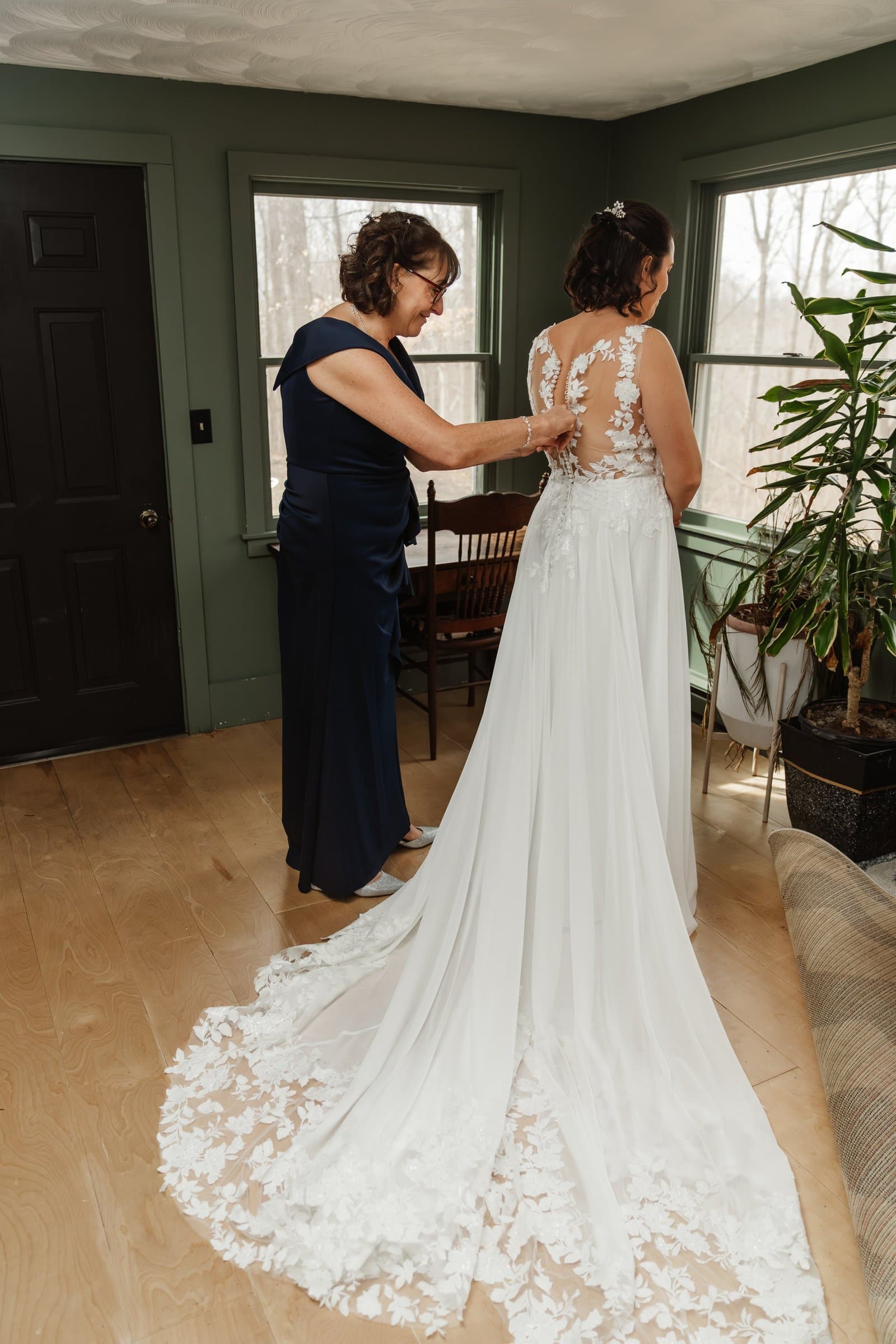
Getting-ready wedding photos usually take about 90 minutes: 30 minutes for detail photos before anyone is dressed, then an hour for the last of hair and makeup, getting dressed, and any letters, gifts or reveals. Three things help more than anything else: a room with a big window, every detail item in one box, and a hair and makeup finish time with 30 minutes of padding.
This is the part of the day that sets the tone, and it's also the part most likely to run long. Below is how the 90 minutes break down, what goes in the detail box, how to pick a room, how hair and makeup timing works, and the moments worth planning for.
How long do getting-ready photos take?
| Part | Time | What happens |
|---|---|---|
| Details | 30 min | Rings, invitation, shoes, jewelry, heirlooms, the dress or suit on a hanger |
| Getting ready | 60 min | Final hair and makeup touches, getting dressed, both sides covered in this window |
| Each reveal or first look | 15 min | With a parent, a grandparent, or the wedding party |
On a day without a first look, that usually means photography starts about 90 minutes before the ceremony. A first look with each other, or couple and wedding party portraits before the ceremony, moves the start earlier. How that fits the rest of the day is in our wedding photography timeline guide.
What details should be ready for photos?
We photograph details first, before anyone is dressed, while the room is still calm. If the pieces are spread across three rooms and a car, that half hour turns into a search. Everything in one box the night before is the single easiest thing you can do for these photos.
What goes in the box:
- Both wedding bands and the engagement ring
- The invitation suite, plus a spare
- Vow books, if you have them
- Shoes, both pairs
- Jewelry, cufflinks, tie or bow tie, watch
- Perfume or cologne
- Heirlooms and anything borrowed
- Loose florals, if they arrive early
- Anything with a story behind it
The dress looks best hung near a window on a real hanger (wood, not the plastic one from the shop) with a clear wall behind it. The same goes for the suit. It takes about two minutes to set up.
Rings are the item most likely to be somewhere else. If someone in the wedding party is holding the bands for the ceremony, it helps to have them in the box for the first half hour and handed over after.
How to choose a getting-ready room for photos
Window light matters most
A room with at least one large window gives soft, flattering light with no extra equipment. North-facing windows get indirect light all day. South- and west-facing windows can throw hard patches of direct sun across the floor in the afternoon, which is workable but less forgiving. If your venue offers a choice of suites, the one with the most window wins over the one with the nicest furniture.
Lamps and overhead lights
Warm lamps and overhead bulbs are a different color than daylight, and a face lit by both ends up two colors at once. On the day we'll often switch off room lights near the window. The one exception is the makeup station, where your artist needs good light to work, so it helps if their chair and the window aren't in the same corner.
Space and clutter
Hair and makeup stations, garment bags, suitcases, snacks and eight people fill a hotel room fast. A room where the bags and coolers can live somewhere other than next to the window makes the biggest difference. Plastic water bottles, grocery bags and phone chargers are the usual things that sneak into the background. Light, neutral walls are easier on skin tones than strong colors, which reflect onto faces.
Venue suite, hotel, home or rental
- Venue suites save a drive and keep everyone in one place. Worth asking which way the windows face and when the room is available.
- Hotel rooms vary a lot. A corner room or a suite usually has more window and more floor space. Check-in times are often later than a morning start, so many couples book the night before.
- A family home can be the most personal option. The room with the best window might be the living room, not a bedroom.
- Airbnb and other rentals come with house rules. Airbnb's guest ground rules limit visitors to approved guests and say photography for commercial use needs the host's documented permission, so it's worth telling the host up front about your stylists, wedding party and photographers.
Two getting-ready locations
Both sides get covered during the getting-ready hour. When the two rooms are down the hall from each other, that's easy. When they're at two different addresses, the drive between them comes out of the same window, so we plan the timeline around the real distance. Two suites at the same venue, or two rooms in the same hotel, keep the most time for photos. Which venues have real getting-ready space is part of our guide to Ohio wedding venues.
Hair and makeup timing for wedding photos
Hair and makeup running late is the most common reason a photo schedule gets squeezed. Artists often plan on 60 to 90 minutes each for hair and makeup for the person getting married, and 30 to 45 minutes each for wedding party members and parents, according to Zola's hair and makeup timing guide. With six people in the chair, the morning starts early.
What we'd suggest:
- An honest finish time, plus 30 minutes. Being ready early costs nothing. Being ready late costs portraits.
- The finish time in words. "Done by 2:00" can mean the brush goes down at 2:00 and the dress goes on after, or that you're finished and dressed at 2:00. Those are 10 or more minutes apart, and on a tight afternoon that's the whole cushion.
- A few final touches saved for the camera. Lipstick, the veil, earrings or a last pin in the hair photograph well, so it helps when they happen after we arrive rather than an hour before.
- Your artist's say on the order. Some artists like to do the person getting married first so nothing is rushed, and others prefer last so everything is fresh. Either works if the finish time holds.
If the morning runs behind anyway, we'll find the time somewhere else. That's what the buffers are for.
Moments worth planning for while getting ready
Getting dressed
A dress with a row of buttons or a corset back takes noticeably longer than a zipper, and it's the moment most people want photographed. Deciding ahead of time who helps (a mom, a sister, the maid of honor) keeps the room from crowding around. On the other side, the tie, cufflinks, watch and jacket go on faster, and the photos are usually a little looser.
Letters and gifts
If you're exchanging letters or gifts, reading them in the getting-ready room, sitting near the window, gives the best light and a quiet spot. Having someone hand it over, instead of finding it on the dresser, gives us the moment of it arriving.
Reveals with family and friends
A first look with a dad, mom, grandparent or the wedding party usually happens right here, in or just outside the getting-ready room. Each one is about 15 minutes of the morning. The bigger first-look decision, with each other, is covered in our first look vs. aisle reveal guide, and if you're planning to read vows privately before the ceremony, our private vows guide covers that.
What to wear while getting ready
A button-front shirt or robe comes off without touching hair or makeup. Matching robes are optional. A simple, plain version looks less dated in 20 years than a slogan or a bold print.
Frequently asked questions
Do we need getting-ready photos?
Most days include them. Even on a six-hour day, coverage usually starts about 90 minutes before the ceremony, which takes in the details and the end of getting ready. The details, getting dressed, and the reveals with family only happen in that hour, and they give the gallery its beginning.
When should the photographer arrive for getting-ready photos?
About 90 minutes before the ceremony on a day without a first look, and earlier if there are portraits before the ceremony. That timing works best when hair and makeup are mostly done for everyone but the final touches.
What if our getting-ready room is small or dark?
We'll use the best window in the building, even if it's in a hallway or a lobby, for the dress and a few portraits. A small room mostly means keeping the bags somewhere else.
Should the groom or other partner have getting-ready photos too?
Yes, if both of you are getting ready within reach. Both sides are covered in the getting-ready window, and the details box for that side (cufflinks, watch, cologne, tie) gets photographed too. Two locations far apart is the main thing that makes it harder.
What should be in a wedding day emergency kit for the getting-ready room?
Steamer, safety pins, stain remover, snacks and water cover most of it. The full list, and who should hold it, is in our wedding day emergency kit guide.
The short version
A window, a box, and a finish time with room in it. If you'd like to see how these moments look in a full gallery, our portfolio has them, and every package includes help building the morning into your timeline.