Wedding Planning
Ohio Winter Wedding Photography: Daylight, Cold and Indoor Portraits
How to plan an Ohio winter wedding around short daylight: timelines with and without a first look, how long to stay outside in the cold, indoor portrait spots and winter outfits.
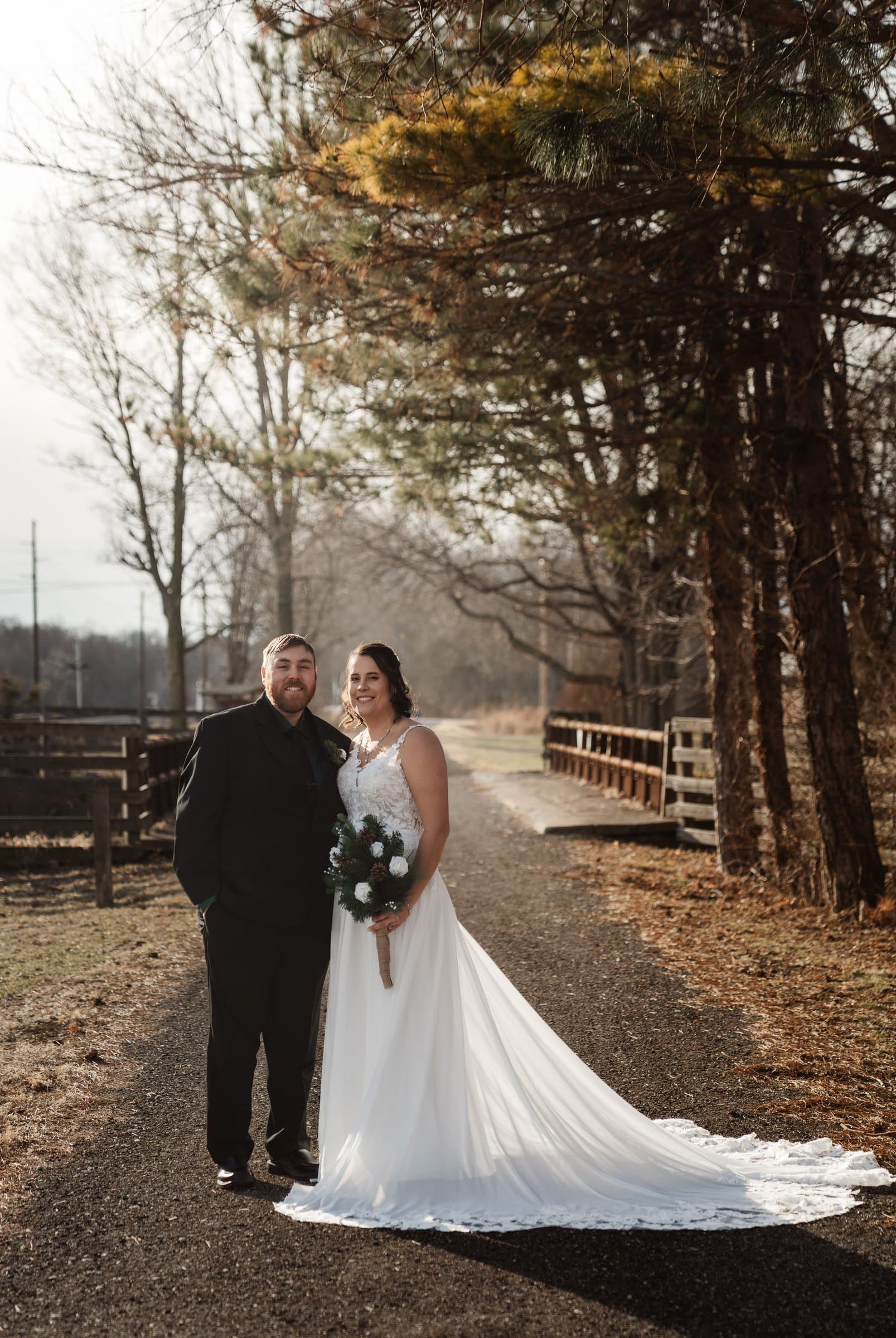
A winter wedding in Ohio is planned around daylight first and cold second. In early December the sun sets around 5:00 in Norwalk and it is dark about half an hour later, so outdoor portraits belong in the early afternoon. Short outdoor sets, a couple of scouted indoor portrait spots, and outfits that work with a coat on or off take care of most of the rest.
How much daylight does a winter wedding in Ohio get?
Less than any other season, and the afternoon goes fast. For Norwalk, sunset comes at about 5:01 in early December and 5:05 on the winter solstice, when the sun is up for only a little over nine hours. By mid-January it has crept back to about 5:27, and by mid-February about 6:00.
Two numbers matter more than sunset itself:
- Golden hour starts about half an hour before sunset. In December that means roughly 4:30.
- Usable outdoor light runs out about half an hour after sunset. In December that is around 5:30. After that, anything outdoors is lit by flash.
Towns farther east in the service area, like Cleveland, Akron and Canton, see sunset about four or five minutes earlier than Norwalk. Daylight saving time ends on the first Sunday in November, which pulls sunset back an hour overnight. Our guide to choosing a ceremony start time in Ohio has sunset times for every month and walks through the time change.
How to plan a winter wedding timeline
Every winter timeline answers one question: when do the couple portraits happen while there is still light? There are two good answers.
With a first look
This is the version we would lean toward for most December and January weddings. Couple portraits and wedding party photos happen before the ceremony, in daylight, and the ceremony can start as late as you like.
A December example with a 4:00 ceremony and a first look at 2:00 looks like this:
- 12:30 Details and getting ready (90 minutes)
- 2:00 First look (15 minutes)
- 2:15 Couple portraits (30 minutes)
- 2:45 Wedding party (30 minutes)
- 3:15 Out of sight while guests arrive
- 4:00 Ceremony
- 4:35 Family formals, indoors
- Around 5:00 A few minutes outside at sunset, if the weather cooperates
Family formals stay after the ceremony even on a first-look day, because it's the one time everyone is already in the room. In winter they are almost always indoors, which is fine. Our first look vs. aisle reveal guide lays out the trade-offs if you are still deciding.
Without a first look
Formals, wedding party photos and couple portraits all stack after the ceremony, and together they take about 80 to 90 minutes. To keep the couple portraits in daylight in December, the ceremony would need to start around 2:30. A 2:30 ceremony puts formals at about 3:10, the wedding party at 3:30 and couple portraits from 4:00 to 4:30, finishing right as golden hour starts.
A later ceremony works too, with the understanding that the couple portraits will be mostly indoors. For one February wedding we photographed with a 4:30 ceremony and no first look, the timeline had the wedding party outside if it wasn't too cold, and the couple portraits planned both outside and inside.
The full wedding day timeline guide covers how every block fits together. Every wedding package with us includes timeline assistance, and the winter version is one we build around your exact sunset.
How cold is too cold for outdoor photos?
It depends more on wind than on the thermometer, but short sets work in almost any winter weather. NOAA's 1991-2020 normals for Norwalk put the average January high at about 33 degrees and the average low around 19. December and February are a few degrees warmer.
What works in practice:
- Five to ten minutes outside at a time. Long enough for a real set, short enough that nobody's hands turn red. Red noses and hands do show in photos.
- Coats on until the frame. A wedding party member holds the coats a few steps away, and they go back on the moment we're done.
- A warm room right by the door. Portraits go faster when the back-and-forth is short.
- Hand warmers in pockets, for anyone who has to hold a bouquet bare-handed.
- Wind at your backs. Lake Erie wind is the real enemy near the shore. We'll turn you so it hits your shoulders instead of your faces and veils.
The National Weather Service wind chill chart is a useful check on a bitter day. When the wind chill makes a few minutes outside a bad idea, the whole set moves indoors and nobody minds.
On our side, cameras moved from cold air into a warm room fog up, so we give the gear a few minutes to adjust before shooting indoors again.
What about snow?
Falling snow photographs beautifully, especially against a dark background like trees or a barn wall. Snow on the ground brightens everything and bounces light back into faces. The practical side is slush, salt and ice: salt stains on hems, slick steps, and parking lots that need a plan.
Snowfall varies a lot across the service area. NOAA normals put yearly snowfall at about 33 inches in Norwalk and about 64 inches at Cleveland Hopkins Airport, and the snowbelt east of Cleveland gets more. Travel days are where snow costs time. OHGO, the Ohio Department of Transportation's traffic site, shows road conditions and cameras, and an extra 15 minutes on every drive is a sensible winter default.
Where to take indoor wedding portraits in winter
Most winter portraits happen inside, so the indoor spots are worth scouting as carefully as a garden would be in June. Ideally that means visiting the venue in winter, at the same time of day as your portraits.
What we look for:
- Large windows. The single best indoor light. A couple standing a few feet from a big window, facing it at an angle, gets soft light with some direction to it. North-facing windows give the most even light all afternoon.
- Doorways and open barn doors. Light from outside falls on your faces while the room behind you goes darker.
- Staircases. Height, lines and room for a wedding party at different levels.
- Long hallways with windows along one side. Often overlooked and very usable.
- Lobbies, libraries and rooms with fireplaces, especially at historic venues and hotels.
- A covered porch, which gives outdoor light and a winter scene without standing in the snow.
- The ceremony space after guests leave, if the church or venue allows it.
Two things commonly get in the way. The first is rooms being set: the reception room is often mid-setup during portrait time, so it's worth asking the venue which rooms are open and empty at that hour. The second is windowless rooms. A basement bridal suite or an interior room can work with flash, but it takes a spot with windows to get the soft, natural look most couples want. Our getting-ready photos guide covers choosing the room for the morning.
Once the sun is down, everything indoors is lit with flash. How we light a dark reception, and what couples can do to help, is in our guide to reception flash photography.
What to wear for a winter wedding (for photos and for warmth)
The best winter wedding outfits look good with a layer on and hold up for the few minutes it comes off.
- A wrap, shawl or faux fur stole for the couple, in ivory, cream or soft gray. It adds texture in photos and stays on for most outdoor frames.
- A real coat for the walk. A long wool coat over a suit looks sharp in photos, and a cream or camel coat over a wedding dress does too.
- Coordinated cover-ups for the wedding party. Matching wraps, scarves or similar-colored coats keep group photos looking planned. Mismatched puffer coats pull the eye in group photos.
- Boots for walking, shoes for the frame. Snow boots between locations, then the wedding shoes for photos where feet show.
- Long sleeves, velvet and heavier satin all look right for the season and photograph with depth.
- Thermal layers under the dress, if the dress allows. Nobody can see them.
- Gloves off for ring and hand shots. They can go right back on.
On color, snow reads as a cool blue-white in photos. An ivory or champagne dress looks warmer against it, and a bright white dress can blend in. Deep greens, burgundy and navy stand out well against both snow and gray sky.
Winter details that help the photos
- String lights and candles give warm background light once it's dark, and they make evening photos feel like the room did.
- Evergreen garlands add color at a time of year when there isn't much outside.
- An early sparkler exit is easier in winter, since it's dark by the end of dinner. Our sparkler exit guide covers the timing and safety side.
- Indoor ceremony rules, like no flash or no moving around during the service, are common at churches. Knowing them before the day helps us plan the ceremony coverage.
Frequently asked questions
What time is sunset for a December wedding in Ohio?
Around 5:00 in north central Ohio. In Norwalk, sunset is about 5:01 in early December and 5:05 on the winter solstice, with usable outdoor light fading by about 5:30. Cities farther east, like Cleveland and Akron, are a few minutes earlier.
Do we need a first look for a winter wedding?
No, though it's the easiest way to get couple portraits in daylight with a mid- or late-afternoon ceremony. Without a first look, a ceremony around 2:30 keeps December portraits in daylight. A later ceremony works too, with most portraits indoors.
How long can we take photos outside in the cold?
Five to ten minutes at a time works for most couples, with coats on right up until the frame and a warm room nearby. Wind matters more than temperature, so on a very windy day the sets get shorter.
What happens to the photos if it snows?
Falling snow usually makes for some of the best photos of a winter wedding. The bigger effects are on travel and footing, so extra drive time and someone checking for icy steps near the portrait spots help the day run on time.
What should bridesmaids wear over their dresses in winter?
Matching or coordinated wraps, faux fur stoles or scarves look best in group photos. If they are wearing their own coats between locations, those coats usually come off for the group frames.
If you are planning a winter date and want to see how the light works at your venue, reach out and we'll look up your sunset and talk through the timeline.