Wedding Planning
Private Vows: How to Plan, Write and Read Them on Your Wedding Day
Private vows are read to each other away from guests, usually after a first look or through a door. When they fit, where, how they are photographed, and how to write them.
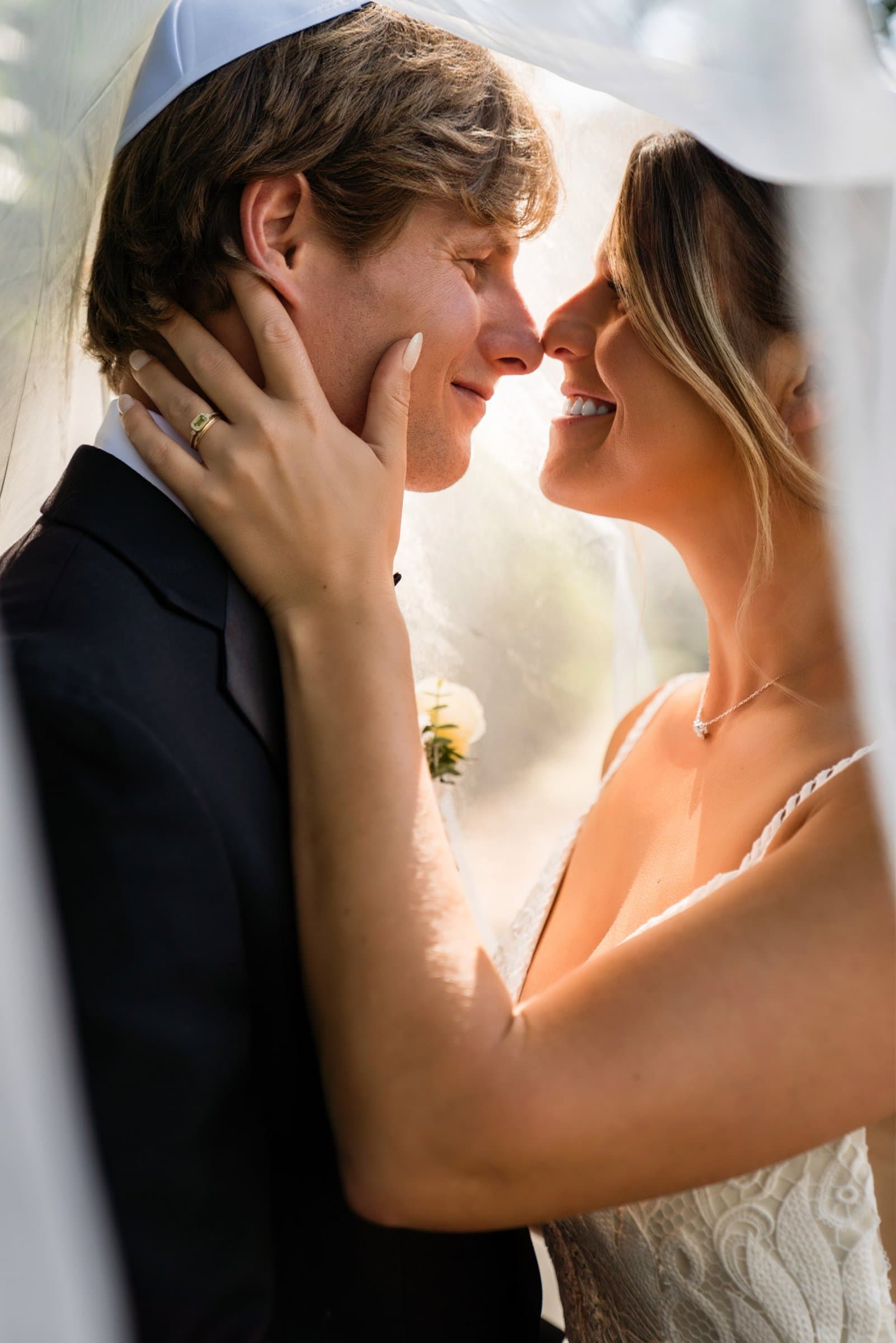
Private vows are personal vows the two of you read to each other away from your guests, most often right after a first look or through a door if you are saving the first sight for the aisle. We plan about twenty minutes for them, in a quiet spot with even light, with the vows written in vow books rather than on a phone. Your ceremony vows still happen as usual.
This guide covers when and where private vows fit, how we photograph them, how to write them, and what to do with the pages afterward. If you have not decided yet whether to see each other before the ceremony, our first look vs. aisle reveal guide covers that choice first.
What are private vows?
Private vows are promises you write yourselves and read to each other with nobody else listening, apart from the people photographing or filming it. They are separate from the vows in your ceremony.
They are not a legal step. In Ohio, a marriage is solemnized by an authorized officiant under Ohio Revised Code 3101.08, with a valid marriage license. Private vows sit alongside that, not in place of it. Our Ohio marriage license checklist has the legal side.
Writing your own vows is now the norm: 61% of couples in The Knot 2026 Real Weddings Study wrote their own. Reading them privately is one way to do that.
Why couples read their vows in private
- Speaking in front of a crowd. The same Knot study put the average guest count at 117. Plenty of people can say something honest to one person and cannot say it to a hundred.
- A ceremony with fixed vows. In a Catholic wedding, the exchange of consent uses one of the Church's approved texts, and as Msgr. William King writes for Simply Catholic, the couple is not free to compose their own. Many other traditions also use set wording. Private vows give personal words a place without changing the service.
- Words meant for one person. The inside jokes, the hard year you got through, the thing you have never said out loud.
- A shorter ceremony. Some couples keep the ceremony vows traditional and brief and save the long version for later.
When do private vows happen on the wedding day?
There are four realistic windows. Each one costs something different.
Right after a first look
If you are doing a first look, this is where we would put them. You have already seen each other, the first wave of nerves has passed, and you are in a quiet spot with the photographers already set up. In our timelines a first look is about fifteen minutes; with vows read in the same spot, we plan closer to twenty-five. Couple portraits follow straight after.
Through a door, without seeing each other
If you are keeping the aisle reveal, you can stand on either side of a door, a wall or a tree, hold hands and read your vows without seeing each other. This is sometimes called a first touch. We plan about twenty minutes for it. Both faces are photographed separately, along with the hands.
Right after the ceremony
Possible, but it is the most expensive window. On a day without a first look, family formals, bridal party photos and couple portraits already take about ninety minutes of cocktail hour. Adding vows there means spending more of that time away from your guests. If it is the only option, ten quiet minutes straight after the recessional, before formals begin, is usually the least disruptive.
The night before or the morning of
Some couples read their vows over dinner the night before, or trade them as letters while getting ready. That keeps the wedding day schedule untouched, though it usually happens outside photography coverage. Letters delivered during getting ready are a common middle ground, and our getting-ready photo guide covers how that part of the morning works.
Where to read private vows
The spot makes a bigger difference than people expect. What works best:
- Out of sight of arriving guests. A side garden, a back porch, an empty room upstairs. Anywhere the bar and the parking lot are not in the background.
- Even light. Open shade outdoors, or a room with one large window. Bright midday sun means squinting at the page.
- Quiet. If a videographer is recording audio, road noise, air conditioning and wind all end up in the film.
- Close to where you already are. A long walk in a dress eats the twenty minutes.
Lakefront spots around Huron, Sandusky and Marblehead look lovely but can be windy, which flips pages and carries voices away. On a rainy or cold day, a quiet room with good window light works just as well, and it keeps the plan from depending on the forecast.
How private vows are photographed
We pose and direct this moment the same way we do the rest of the day. Before you start, we place you facing each other at a slight angle so both faces show, tell you who is reading first, and show you where to hold the vow book: low, around chest height, so it does not cover your face.
Once you start reading, we step back and photograph from a distance with a longer lens. You hear your partner, not us. When you have both finished, we pose a few frames while the moment is still fresh: the hug, the two of you holding the books, your hands.
Two details worth mentioning to us ahead of time:
- Whether the words stay private. Close-ups of vow books are a favorite detail shot, and handwriting can be readable in a high-resolution photo. If you would rather nobody can read your vows in your gallery, a heads-up beforehand means the close-ups get framed with the writing out of focus.
- Who else is there. Most couples keep it to the two of them plus photography and video. Some invite their officiant for a short prayer afterward. Every extra person changes how freely people talk.
If being photographed while emotional makes you tense, our guide to feeling natural on camera explains how posing and direction take that off your plate.
How to write private vows
A first draft about two months out
A first draft two months before the wedding leaves time to set it aside and come back to it. The final version copied into your vow book by about two weeks out means it can go into the detail box with your rings and invitation, and it arrives with everything else.
Length agreed, words kept secret
Private vows can run longer than ceremony vows, but a big mismatch is awkward: thirty seconds from one of you and six minutes from the other. Half a page to a page each, or one to three minutes read aloud, is a comfortable range. Agreeing on a rough length and tone (funny, serious, or both) is enough. The words themselves are more fun as a surprise.
A simple structure
- A specific memory. The moment you knew, or a small day that says something about you two.
- What you see in them. Who they are, as well as how they make you feel.
- Promises you can picture. "Always" and "forever" are fine, but specific promises hit harder: coffee made first, Saturday mornings protected, the hard conversation instead of the silent one.
- Something honest about hard days. One line acknowledging that it will not always be easy gives the rest weight.
Prompts for a blank page
- "When did I first know this was it?"
- "What is something small you do that I never want to lose?"
- "What did the hardest stretch of our relationship teach me about you?"
- "What do I want a regular Tuesday to look like in twenty years?"
- "What promise would only make sense to the two of us?"
Words that sound like you
If you are funny together, the vows can be funny. Reading them out loud once or twice before the day catches sentences that look fine and are impossible to say. Handwriting or printing them into a vow book reads better on camera than a phone, and it gives you a keepsake. If your handwriting is hard to read in dim light, a printed page tucked into the book works too.
Keeping your vows after the wedding
The pages are the part people forget about until they go looking for them years later.
- Paper stored like a document. The Library of Congress recommends a cool, dry, stable spot away from light, acid-free and lignin-free folders or boxes, and no tape, rubber bands or glue on the paper. Attics and basements are the worst places for it.
- A digital copy. A scan or a flat, well-lit phone photo of each page, saved with your wedding gallery, covers you if the originals are ever damaged. Our wedding album and print guide covers backing up digital files properly.
- A photo alongside them. A print of the two of you reading, framed next to the vow book or a single page, or a spread in your wedding album.
- An anniversary reread. Some couples do it every year; some seal them in an envelope to open at five or ten years.
Frequently asked questions
Do we still say vows during the ceremony?
Yes. Your ceremony still includes the vows or declaration your officiant uses, and that is part of the legal marriage along with your license. Private vows are in addition to those.
How long should private vows be?
One to three minutes each read aloud, or roughly half a page to a page, is a comfortable range. Agreeing on a rough length ahead of time keeps the two of you balanced.
Can we read private vows without a first look?
Yes. Reading them through a door or around a corner while holding hands keeps the aisle reveal intact. We plan about twenty minutes for it.
Who is there for private vows?
Usually just the two of you and whoever is photographing or filming. Some couples add their officiant for a short blessing. Fewer people usually means more open reading.
Will our vows be readable in the photos?
They can be, since close-ups of vow books are common detail photos. If you want the words kept private, a heads-up beforehand means the pages get photographed with the writing out of focus.
If private vows are part of your plan, timeline assistance is included with every package, and we will fit them into your day around the light and your ceremony time. Ask us anything about how it could work at your venue.