Wedding Planning
Dogs at Weddings: How to Include Your Dog Safely (and Get the Photos)
How to include your dog in your wedding: roles that suit your dog, who handles the leash, venue rules, ASPCA-checked flower and food safety, and photo timing.
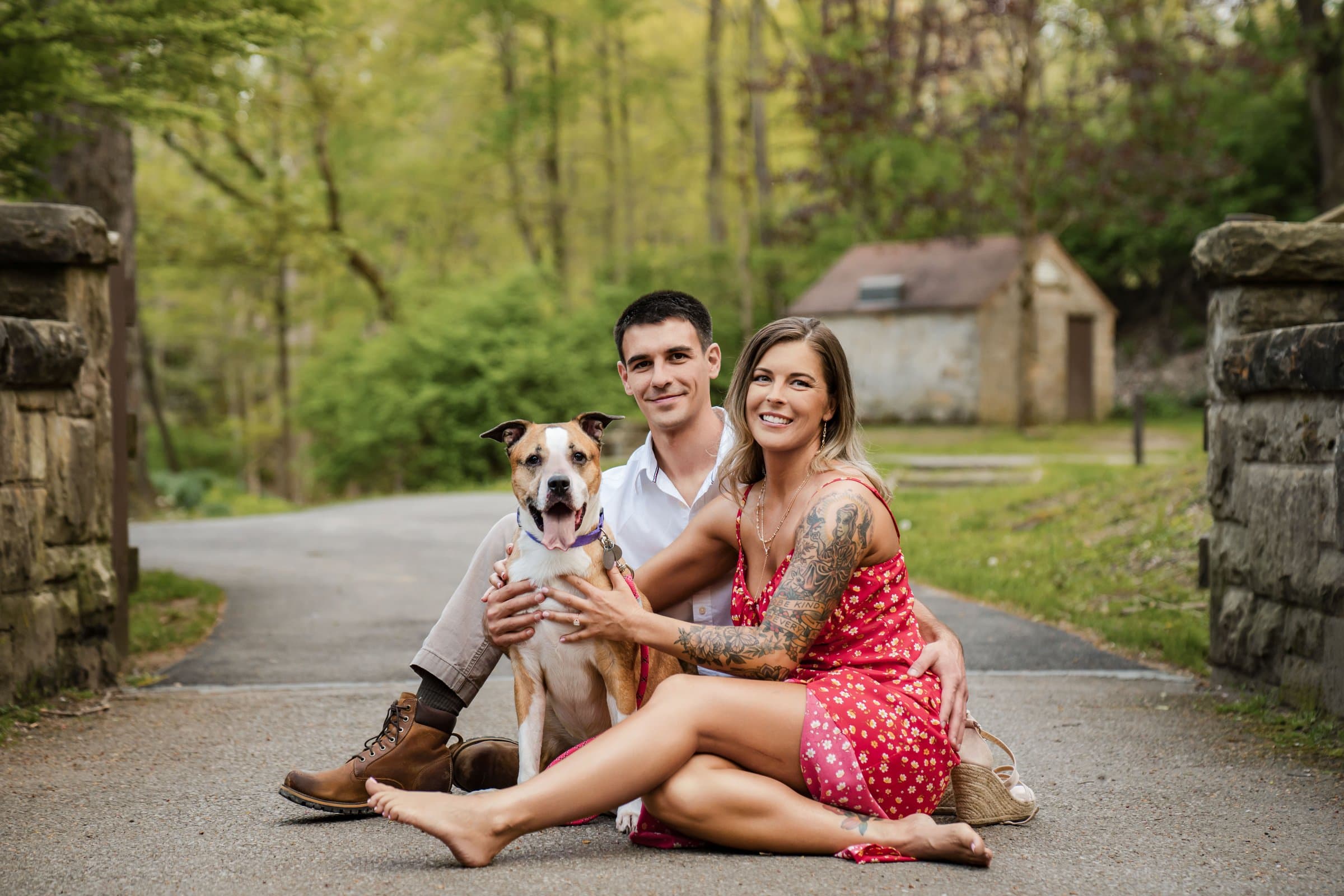
Yes, bring the dog. A dog at a wedding goes well with four things in place: written permission from the venue, a handler who isn't a guest, a short appearance of about 20 minutes that fits the dog's temperament, and a dog-safe setup for heat, flowers and food. After that, the dog goes home or somewhere quiet, and everyone stays happy.
It's the same advice we give for engagement sessions. Below: how to tell whether your dog is suited to a ceremony role, the roles that work, who should hold the leash, venue rules, the safety details most guides get slightly wrong, and how we fit the dog into the photos.
Is your dog a good fit for the wedding?
The honest test is how your dog behaves somewhere loud and unfamiliar, not how cute they'd look in a bow tie. A wedding means strangers reaching down, music, clapping, food at nose height and you in clothes they don't recognize. The American Kennel Club's wedding advice quotes a planner making the point plainly: a dog that's already anxious, hard to control or uncomfortable around crowds will have those problems amplified on the day.
A few questions that sort it out quickly:
- How does your dog do at a busy park or a crowded patio?
- Does clapping, cheering or a microphone make them bark or bolt?
- Will they walk on a loose leash with someone other than you?
- Are they relaxed with kids who want to pet them?
- Can they settle and lie down in a new place?
Mostly yes means a ceremony role is realistic. Mostly no still leaves plenty of options. The quiet version, a few portraits before guests arrive and then home, is the one we'd lean toward for most dogs anyway.
Ways to include your dog in the wedding
| Role | Best for | Time on site |
|---|---|---|
| Portraits only, before the ceremony | Almost any dog, including shy or older ones | About 20 to 30 minutes |
| First look with the dog | Dogs who get excited to see you | About 30 minutes, with portraits |
| Walking the aisle with a handler | Calm, leash-trained, crowd-comfortable dogs | An hour or more around the ceremony |
| Ring bearer | Very steady dogs with a reliable handler | An hour or more around the ceremony |
| Cocktail hour meet-and-greet | Social dogs who like strangers | Short, and after the portraits |
| Home, but in the day | Anxious dogs, extreme weather, no-pet venues | None |
Portraits and a first look
This is the lowest-stress option and usually the best photos. The handler brings the dog before guests arrive, you get a few minutes of greeting, and then we photograph the two of you with your dog while everyone is still fresh. If you're planning a first look with each other, the dog can join right after. Our first look vs. aisle reveal guide covers that decision.
Walking the aisle or carrying rings
A dog in the processional needs a handler walking with them, since a dog "sent" down the aisle alone tends to stop and greet every row. For ring bearer dogs, we'd lean toward a secured decoy on the collar and the real rings in the best man's or maid of honor's pocket. A ring pouch that clips shut is safer than a ribbon tie either way.
After the recessional, the handler takes the dog straight out rather than into the crowd. That's the loudest few minutes of the day.
If your dog stays home
Some of the best options don't involve the dog at the venue at all: dog photos at your engagement session used on the save-the-dates, a small framed photo on the welcome table, a signature drink named after them, or a portrait at home the morning of. Your engagement session is the easiest place for the dog to star, and it's included with our wedding packages.
Who should handle the dog?
Someone whose only job is the dog, and not a guest. A cousin holding the leash through the ceremony and cocktail hour misses the wedding they came to, and a dog handed between three relatives ends up with nobody watching it.
The two good options are a professional wedding pet attendant or a trusted friend or family member who has agreed to leave early with the dog. A pet attendant typically handles transport, walks, water, potty breaks, dressing the dog and holding the leash for photos, then takes the dog home. Searching "wedding pet attendant" plus your nearest city is the fastest way to find them in Ohio, since most serve a set radius.
Questions worth asking a pet attendant:
- How many weddings have you handled, and can we see reviews from them?
- Are you insured, and do you have pet first aid training?
- Will you meet our dog before the wedding?
- How do you transport the dog, and is your vehicle air-conditioned?
- What's your plan if our dog gets overwhelmed or the weather turns?
- Can you work from our photography timeline and coordinate with the planner?
A friend doing the job gets the same briefing: the timeline, your vet's number, where water is, and permission to take the dog home early without asking anyone.
Venue rules and guests
A venue's pet policy is the first thing to confirm, and in writing. Some welcome dogs, some allow them outside only, some allow them for photos but not near food service, and some say no. Questions for the venue:
- Are dogs allowed, and where: ceremony site, grounds, indoors?
- Any size, breed or number limits?
- Is there a spot for water and a relief area away from guests?
- Do they need proof of vaccinations or a signed waiver?
- Any cleaning fee?
If your venue says no, the portraits can often happen somewhere nearby before the ceremony. Many public parks allow leashed dogs, but each sets its own rules, so that park's current page is the one to check.
It's also kind to check with the people standing closest: the officiant, the wedding party, musicians and the caterer. The AKC suggests asking about dog allergies or fears, and brushing the dog beforehand to cut down on loose hair.
A guest's service dog is a different category. Under the ADA, a service animal is a dog individually trained to do work or perform tasks for a person with a disability, and emotional support animals don't qualify. Businesses open to the public, including most event venues, generally have to allow service animals even with a no-pets policy, while religious organizations such as churches are exempt from that federal rule (ADA.gov service animal FAQ).
Keeping your dog safe on the wedding day
Flowers: which wedding flowers are toxic to dogs?
This is where a lot of wedding advice gets the details wrong. According to the ASPCA's toxic and non-toxic plant list:
- Toxic to dogs: hydrangea, tulip, peony, eucalyptus and lily of the valley. Lily of the valley is the serious one, with heart rhythm problems and seizures among the signs.
- Listed as non-toxic to dogs: roses, sunflowers and baby's breath, though the ASPCA notes baby's breath can cause mild stomach upset if eaten.
- Lilies such as Easter and tiger lilies are extremely dangerous to cats but listed as non-toxic to dogs.
The practical version: a quick note to your florist that a dog will be near the bouquets, and the handler keeping the dog away from arrangements at nose level. "Non-toxic" still doesn't mean a good snack.
Food, drinks and mints
The ASPCA's list of people foods to avoid reads like a cocktail hour menu: alcohol, chocolate and coffee, grapes and raisins, onions and garlic, macadamia nuts, and xylitol. That last one hides in sugar-free gum and breath mints, and the FDA warns it can drop a dog's blood sugar dangerously within 10 to 60 minutes. If there's a dog in the day, the mints in your wedding emergency kit stay zipped away.
Guests love to share. A small sign or a word from the handler covers it.
Heat, cars and Ohio summers
- Pavement: the AKC notes that when the air is 86 degrees, asphalt can reach 135. Their test is to hold your hand on the surface for ten seconds; too hot for your hand means too hot for paws. Grass and shade are the better portrait spots in July.
- Short-nosed breeds such as bulldogs, boxers and Pekingese overheat faster because, as the AKC explains, they don't pant as efficiently, so their appearance is best kept short and shaded.
- Parked cars are not a holding area. The National Weather Service warns that a parked car can reach dangerous temperatures even on a day in the 70s, and cracked windows don't meaningfully slow it down.
In cold months, the risks flip: short winter portraits, a towel for wet paws, and a warm car with the handler in it between photos.
Noise and the send-off
A sparkler exit, a band's first loud song, or a room-wide cheer at the introductions are hard on most dogs. We'd plan for the dog to be home well before any of them.
The dog's bag
- The collar and leash your dog already walks well in, plus a spare leash
- Water, a collapsible bowl and a towel
- High-value treats and a squeaky toy for photos
- Waste bags
- Any medications
- A copy of vaccination records if the venue asks
- Your vet's number and the ASPCA Animal Poison Control number, (888) 426-4435, which is open 24/7 (a consultation fee may apply)
Any outfit, whether a floral collar, a bandana or a bow tie, gets a few trial runs at home first. The AKC recommends practicing with costumes ahead of time, and a dog that's used to the collar poses like a dog instead of scratching at it.
How we photograph dogs at weddings
We pose and direct you, and the dog works around that. You'll know where to stand and how to hold the leash or kneel down, and we'll build each setup so the dog can be itself inside it: sitting between you, leaning into a scratch behind the ears, walking with you down a path. The handler stands just behind us with treats or a squeaker, so the dog looks toward the camera instead of at a squirrel.
A few things that make it go well:
- Timing: early. Dogs are calmer and you're less rumpled before the ceremony than after cocktail hour.
- A walk first: ten minutes of sniffing with the handler before photos takes the edge off.
- Short and done: about 20 minutes of photos, then the dog leaves while it's still enjoying itself.
- A family photo: if the dog is on site near the ceremony, the first grouping of family formals can include them, and then the handler takes over.
- Expectations: a vet quoted by the AKC puts it well: don't expect tricks, or even stillness.
Where the dog fits in the timeline
Two versions that work:
- With a first look: handler arrives with the dog about 30 minutes before your first look, walks them, and brings them in right after you've seen each other. Couple portraits with the dog, a few frames with the wedding party, then the dog heads home before guests arrive.
- Without a first look: the dog stays with the handler away from the ceremony space until the processional, walks the aisle with them, and leaves after the recessional or after a single family photo.
Every couple we photograph gets timeline help, and the dog's arrival and pickup times go right on it next to everything else. The wedding photography timeline guide shows how the rest of the day fits around it.
Frequently asked questions
Can we bring our dog to our wedding?
Usually, yes, if the venue allows it in writing and someone besides the two of you is responsible for the dog all day. A short appearance for portraits or the ceremony, followed by a ride home, keeps it easy on the dog and on you.
Should a dog carry the real wedding rings?
We'd lean toward a secured decoy on the dog and the real rings with a member of the wedding party. If the real rings do ride on the dog, a clip-shut pouch is far safer than a ribbon, and the handler walks alongside.
What does a wedding pet attendant do?
A wedding pet attendant takes care of your dog for the part of the day it's there: transport, walks, water, potty breaks, dressing, holding the leash during photos and the ceremony, and taking the dog home. It frees the two of you and your guests from dog duty.
What wedding flowers are poisonous to dogs?
The ASPCA lists hydrangea, tulip, peony, eucalyptus and lily of the valley as toxic to dogs. Roses and sunflowers are listed as non-toxic, and baby's breath is non-toxic but can upset a dog's stomach. True lilies are dangerous to cats rather than dogs.
How long should a dog stay at a wedding?
For most dogs, about 20 to 30 minutes of photos plus whatever the ceremony role needs, then home or somewhere quiet. Dogs who love crowds can stay longer with a handler, but the reception's noise and food make it the hardest part of the day for a dog.
You can see how we pose and direct couples in our portfolio, and if the dog is part of your plan, tell us about them.