Wedding Planning
Wedding Photography Timeline: How Long Each Part of the Day Takes
The real block lengths behind a wedding photography timeline, two full sample days with and without a first look, and how many hours of coverage a day needs.
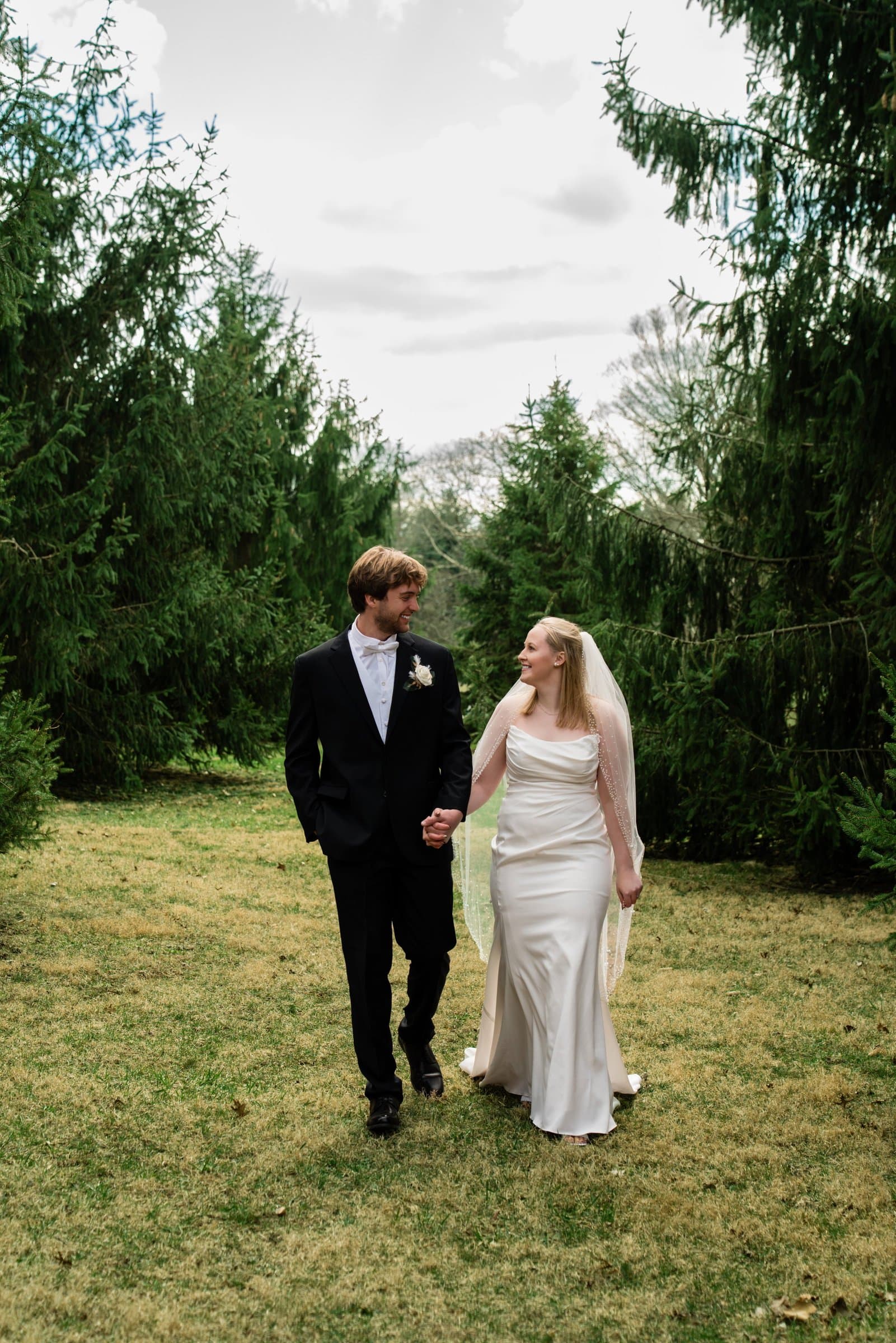
A wedding photography timeline for an eight-hour day usually looks like this: about 90 minutes for details and getting ready, 15 minutes for each first look, 30 minutes each for couple portraits and the wedding party, a 30-minute ceremony, and 2 minutes per family grouping. The reception then runs in order rather than by the clock, with a 15 to 20 minute golden hour break near sunset.
Those are the block lengths we build every couple's timeline from. We've photographed more than 100 weddings since 2019, and timeline help is part of every package, so this is the same math we use on a real planning call. Below: what each block takes, two full sample timelines, how many hours of coverage a day needs, and where days usually slip.
How long does each part of the wedding day take?
This table is the starting point, and your day might stretch a block or skip one, but these numbers hold up well across barns, churches, backyards and ballrooms.
| Block | Time | What it covers |
|---|---|---|
| Details | 30 min | Rings, invitation suite, shoes, dress, heirlooms, before anyone is dressed |
| Getting ready | 60 min | The end of hair and makeup, getting dressed, both sides |
| First look | 15 min each | With each other, and any extra with a parent, grandparent or the wedding party |
| Private vows or first touch | 20 min | The version where you don't see each other |
| Couple portraits | 30 min | The main portrait session |
| Wedding party | 30 min | Full group, each side, pairings with the two of you |
| Tuck away | 15 min | Out of sight while guests arrive |
| Ceremony | 30 min | Plus about 10 minutes for the recessional and the moments right after |
| Family formals | 2 min per grouping | Eight groupings is about 16 minutes; we round up to the next 5 |
| Golden hour portraits | 15 to 20 min | A short break from the reception near sunset |
| Grand entrance | 10 min | The last block that gets a clock time |
Details and getting ready: 90 minutes together
Thirty minutes of detail photos plus an hour of getting ready is the window worth protecting, and it is where the day runs long if hair and makeup slip. The getting-ready photos guide covers the room, the detail items and hair and makeup timing in depth.
First looks add up
Each first look is its own 15 minutes. One with your partner and one with your dad is half an hour of the morning, and a third with the wedding party makes it 45. So we ask how many you want before sizing the prep. If you're still deciding whether to have one at all, our first look vs. aisle reveal guide lays out the trade-offs.
Family formals: 2 minutes a grouping, plus changeovers
Two minutes per grouping is the shooting time, and it assumes a printed list and a wrangler from each side who knows everyone by name. On a simple list, that's the whole block. On a long list with several family groups to rotate (both sides, divorced parents, grandparents who need a chair), turning families over on the lawn takes time too. On one recent day, a 21-grouping list meant 42 minutes of shooting and a block that needed about an hour once the changeovers were counted. Grouping order and how to keep the list short are in the family formals shot list guide.
Two shapes of a wedding day
The first-look decision splits every timeline into one of two orders. Everything else is detail.
With a first look: details, getting ready, first look, couple portraits, wedding party, tuck away, ceremony, family formals, cocktail hour, reception. Family formals stay after the ceremony even on a first-look day, because that's the one moment the whole family is already gathered in one place.
Without a first look: details, getting ready, tuck away, ceremony, then family formals, wedding party and couple portraits back to back during cocktail hour, then reception. At the block lengths above, that's about 90 minutes of portraits, so a one-hour cocktail hour is the first thing we check on a day like this.
There's a third version for big families. If the formals list runs past about 25 groupings, the photos that don't need the two of you together (each side's wedding party, each side's family) can move before the ceremony. It needs a building or a real screen between you, and it needs family dressed and on site early.
Sample wedding photography timeline with a first look
An eight-hour day with a 4:00 ceremony, a 6:00 reception, and sunset around 7:30, which is roughly a late-September Saturday in North Central Ohio.
| Time | Block |
|---|---|
| 12:30 | Coverage starts: details |
| 1:00 | Getting ready, both sides |
| 2:00 | First look |
| 2:30 | Couple portraits |
| 3:00 | Wedding party |
| 3:30 | Tuck away while guests arrive |
| 4:00 | Ceremony |
| 4:35 | Family formals (8 groupings) |
| 5:00 | Cocktail hour, and you're at it |
| 6:00 | Grand entrance and first dance |
| In order | Parent dances, dinner, toasts, cake |
| About 7:00 | Golden hour portraits, 20 minutes |
| 8:30 | Open dancing; coverage ends |
Sample timeline without a first look
Same ceremony time, same sunset. The morning starts later and the portraits stack up after the ceremony.
| Time | Block |
|---|---|
| 1:00 | Coverage starts: details |
| 1:30 | Getting ready, both sides |
| 2:30 | Wedding party photos, each side on its own (about 20 minutes a side) |
| 3:30 | Tuck away while guests arrive |
| 4:00 | Ceremony |
| 4:35 | Family formals |
| 5:05 | Full wedding party |
| 5:30 | Couple portraits |
| 6:15 | Grand entrance and first dance |
| In order | Parent dances, dinner, toasts, cake |
| About 7:00 | Golden hour portraits, 20 minutes |
| 9:00 | Open dancing; coverage ends |
The gaps between blocks are deliberate. That's where a late bus or a missing boutonniere gets absorbed.
Why the reception gets an order instead of times
Once you walk in for the grand entrance, the DJ or band runs the room, and real times move with the food, the toasts and the crowd. So on our timelines the clock stops at the grand entrance and the rest is a list: first dance, parent dances, dinner, toasts, cake, open dancing, and anything else you've planned, like a send-off. We stay in position for all of it.
Two things keep a time after the entrance: golden hour, because the sun decides it, and the end of coverage. How that sunset break works is in our golden hour portraits post.
How many hours of wedding photography coverage do you need?
Coverage runs from the first block, which is usually details about 90 minutes before a no-first-look ceremony, and earlier when a first look has to fit in front of it. Our packages come in 6, 8 and 10 hours (details on the investment page), and here is roughly what each one reaches:
- 6 hours: the ceremony, formals, your portraits, grand entrance, first dance and dinner. Works best with a first look and one location. It usually ends before open dancing.
- 8 hours: the most common. Detail photos and an unhurried morning through toasts, cake, golden hour in spring and fall, and the first stretch of dancing.
- 10 hours: the whole arc, with room for travel between venues, a big formals list, golden hour in high summer, and a send-off.
Three things decide the number more than guest count does: how far apart your locations are, whether you have a first look, and what time the sun sets. A 9:05 sunset in late June comes a lot later in the day than a 6:50 sunset in mid-October, so the same ceremony time can need different coverage. Picking a ceremony time around sunset is its own decision, and we walk through it with a month-by-month sunset table in how to choose your ceremony start time in Ohio.
Where wedding day timelines usually slip
Days run behind. We build buffers in for exactly that reason, and we adjust on the day and tell you what we're trading. These are the four that cause most of it.
Hair and makeup finishing late
It's the number one cause of a squeezed photo schedule. Artists commonly quote 60 to 90 minutes for the person getting married and 30 to 45 minutes for each wedding party member or parent, according to Zola's planning guide, and multiple people in the chair add up fast. We'd ask your artist for an honest finish time and add 30 minutes to it. Being ready early costs nothing. Being ready late costs portraits.
Travel time measured on a good day
Fifteen minutes on a map is closer to twenty-five with parking, a dress, and someone who needs the restroom first. We give every drive its own block: map time plus a buffer of at least a few minutes, more on longer drives. Lake roads on summer Saturdays eat buffers. Adding one portrait stop between a ceremony and reception can also cost more than it looks. On one day we planned, a stop at an arboretum in Huron turned a single 20-minute drive into two drives totaling about 70 minutes, because the portrait spot was north and the reception was south.
A one-venue wedding still has walking in it. If the ceremony site, the barn and the pond are each a few hundred feet apart, a 20-minute portrait block can be closer to 13 minutes of photos once everyone has walked there. We go property by property on that in our guide to Ohio wedding venues.
A family list that grew
It often starts at eight groupings and shows up on the wedding day at fifteen or more. Every grouping added comes out of your portraits or your cocktail hour.
A ceremony that starts late
Everything after it moves too, but sunset doesn't. On a fall day, a 20-minute late start can cost the golden hour break entirely. The tuck-away block before the ceremony is the first bit of slack we give up when the morning runs behind.
Frequently asked questions
How long do wedding photos take after the ceremony?
With a first look, usually just family formals: about 20 to 30 minutes for a typical list, and then you're free for cocktail hour. Without a first look, family formals, the wedding party and couple portraits run back to back, which comes to about 90 minutes.
What time should the photographer arrive?
On a day without a first look, about 90 minutes before the ceremony covers details and getting ready. Each first look, plus couple and wedding party portraits before the ceremony, pushes the start earlier. In our first-look sample above, coverage starts three and a half hours before the ceremony.
Do we need a photography timeline if we have a day-of coordinator?
It helps to have both. A coordinator runs the whole event; the photography timeline decides where portraits, family photos and golden hour fit. We send ours in a format that's easy to forward to your planner, venue and families so everyone works from the same order.
When should we start building the timeline?
The ceremony time is the piece to settle early, ideally before invitations are printed. For our couples, the detailed timeline comes together about a month out: a questionnaire around 45 days before the wedding, a half-hour call around 30 days out, and a final check two weeks before.
How long should we plan for golden hour photos?
Fifteen to twenty minutes, starting about half an hour before sunset. You can look up sunset for your date with the U.S. Naval Observatory's sun calculator, or ask us and we'll check it for your venue.
Where to start
If you have a ceremony time, a reception time, the addresses, and a rough count of family groupings, you have enough to sketch the day with the tables above. If you'd like us to build it with you, every package includes timeline help. Reach out with your date and ask us anything.