Wedding Planning
Average Wedding Cost in Ohio: What Couples Really Spend
What weddings really cost in Northeast and North Central Ohio, using published 2025 and 2026 industry data: what the average hides, where the money goes, and what guest count, season and day of week change.
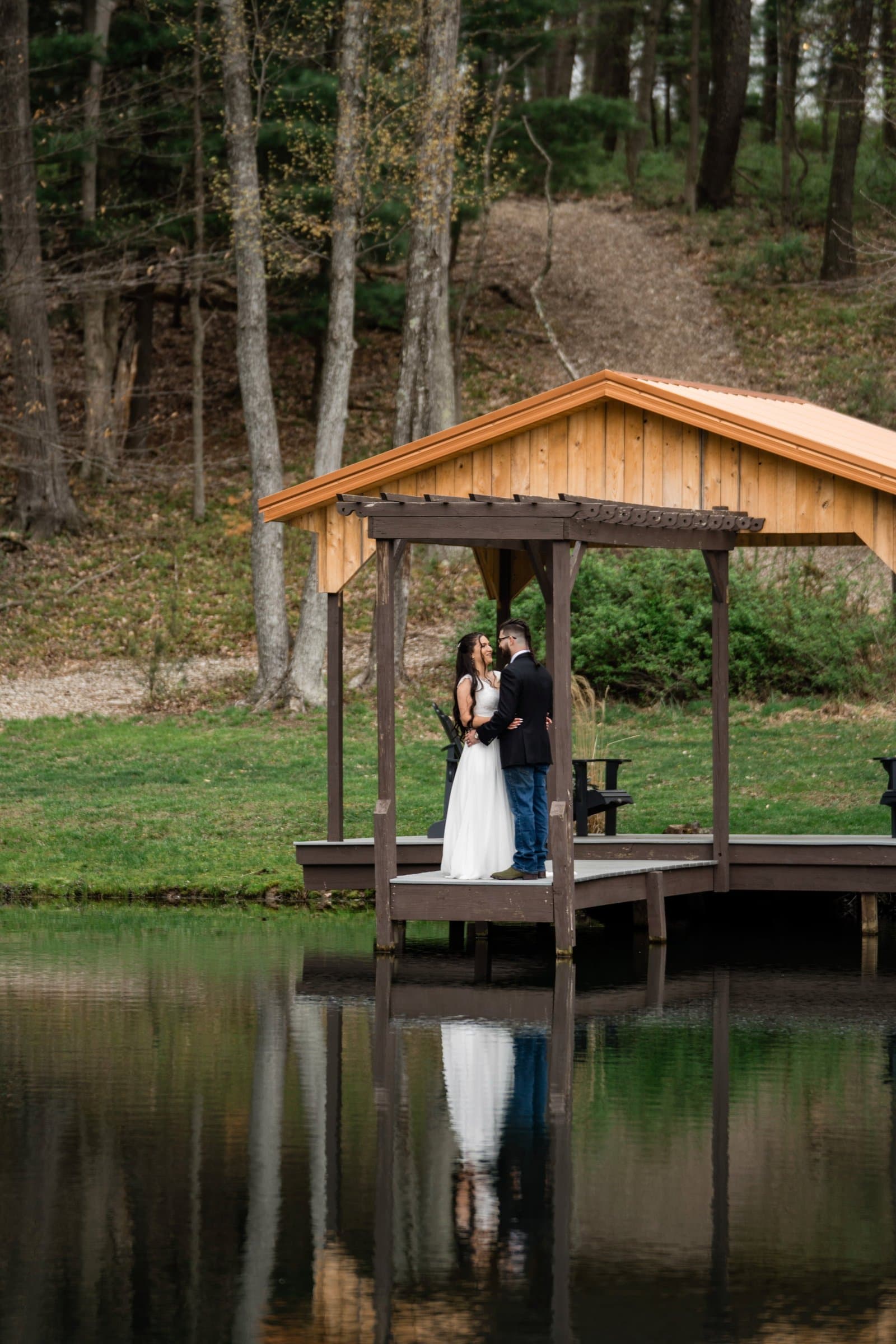
The average Ohio wedding cost $31,779 in 2025. The median cost $17,647. Both come from The Wedding Report's Ohio market data, and the distance between them is the most useful thing on this page. The average describes the whole market. The median describes a couple standing in the middle of it.
What follows is published industry data, pulled from the studies themselves rather than from other people's summaries of them, and localized to Northeast and North Central Ohio wherever the data goes that deep. Our own figures aren't here. Those live on the investment page.
Ohio wedding costs at a glance
Ohio and the country as a whole, for weddings that happened in 2025:
| Measure | Ohio | United States |
|---|---|---|
| Average wedding cost | $31,779 | $32,899 |
| Median wedding cost | $17,647 | $18,231 |
| Weddings | 58,483 | 2,011,044 |
| Average guest count | 121 to 131 | 122 to 132 |
Ohio comes in below the national figure, which matches what every planning site says. What they leave out is how close it is. About $1,100 separates the two averages in that dataset, and $584 separates the medians. Ohio is cheaper than the country, not dramatically cheaper than the country.
The bigger story is the drop from average to median. In Ohio the average is nearly twice the median, because a small number of very large weddings pull the mean up and drag every headline number with it. Half of Ohio couples spent less than $17,647.
Three national studies, three different numbers
Search for the average wedding cost and you'll be handed three figures that don't agree. They're all defensible, and they're measuring different things.
- $34,000 is The Knot's number. The Knot Worldwide's 2026 Real Weddings Study puts the 2025 average at $34,000, holding steady year over year, with couples spending an average of $292 per guest and hosting 117 guests. It surveyed 10,474 US couples married between January 1 and December 31, 2025, recruited through The Knot and WeddingWire memberships.
- Zola reports $36,000. Its 2026 First Look Report, based on more than 11,500 couples, reports an average of $36,000 and an average guest count of 145.
- The Wedding Report's $32,899 is the only one of the three with a median published beside it.
The Knot and Zola survey couples who use their platforms, which skews toward people running a full vendor lineup. The Knot's own study found couples hire an average of 13 vendors. The Wedding Report models the entire market, backyard weddings and courthouse weddings included, and it publishes a midpoint alongside the mean. As of 2026, all three are current.
For a couple building a spreadsheet in Huron or Lorain County, the median is the more honest anchor. The averages are useful for one thing: knowing what the high end of your own market looks like before you walk into a tasting.
Northeast Ohio and North Central Ohio are not one market
Statewide figures flatten a lot. The Cleveland-Elyria metro area, which covers Cuyahoga, Lorain, Lake, Geauga and Medina counties, recorded 9,088 weddings in 2025 at an average of $38,601 and a median of $19,002. That's a market spending roughly $351 million a year.
The guest counts explain most of it. Cleveland-Elyria weddings averaged 149 to 159 guests. Statewide, the range was 121 to 131. The metro isn't paying more for the same wedding so much as throwing a bigger one, and a bigger one costs more per head and in total.
West of there, in Erie, Huron, Seneca, Ottawa, Richland and Ashland counties, guest lists run closer to the state range and venue rents sit lower. A barn outside Norwalk and a downtown Cleveland ballroom are not competing on price, and a couple driving between the two is going to see that in the first two quotes. Our rundown of Ohio wedding venues covers what each type of space usually includes, which moves a budget more than the rental line by itself.
Where the money goes, category by category
Category-level spending is published nationally rather than by state. These are 2026 national averages from the Zola Wedding Cost Index, with the share of budget Zola's planning guide suggests for each.
| Category | National average | Share of budget |
|---|---|---|
| Venue and site fees | $8,573 | 17% |
| Catering | $6,927 | 14% |
| Flowers and decor | $6,345 | 13% |
| Bar service | $5,542 | — |
| Photography | $4,400 | 9% |
| Videography | $3,993 | 8% |
| Wedding dress | $2,000 | 8 to 10% with all attire |
| Music and entertainment | $1,567 | 3 to 8% |
| Hair and makeup | $982 | 1 to 2% |
| Cake and desserts | $917 | 2% |
Ohio budgets generally sit under those averages, in roughly the same proportion the state total sits under the national one. The proportions survive the change in size: food and the room it's eaten in take about a third of the money, and everything else divides what's left.
Venue and catering
Zola puts the national venue average at $8,573, with most couples between $6,900 and $10,300, and catering at $6,927, most commonly $5,500 to $8,300. Two things change those numbers here more than anything else. The first is whether the venue is all-inclusive or a rented shell you fill with vendors. The second is the service charge. Zola reports that 57% of couples face a mandatory venue service fee, and those charges typically add 18 to 25% to the final bill. On a $10,000 food and beverage total, that's $1,800 to $2,500 that never appeared in the quote you compared.
Asking for a sample final invoice rather than a proposal is the fastest way to see the real number.
Flowers and decor
Flowers run higher than most couples expect, at a national average of $6,345 and about 13% of the budget. Ceremony pieces that move to the reception are the standard way to get two rooms out of one arrangement, and most Ohio florists will price that as a repurposing fee.
Photography and video
Zola's index puts wedding photography at a national average of $4,400, with most couples spending $3,500 to $5,300, and calls it about 9% of a total budget. Video is a separate line at $3,993.
Two variables move photography quotes more than any others: hours of coverage, and how many photographers are included. Those aren't the same thing, and comparing quotes without separating them is how couples end up confused. We wrote about what a second photographer does and doesn't change and about how many hours a day of this size takes, both of which tell you more than a package name does. Ours are on the investment page.
Music
Music and entertainment averages $1,567 nationally, which reads low because it blends DJs and bands across every budget. A DJ in this part of Ohio sits nearer that figure than a live band does. Ceremony musicians are usually a separate booking on top of that.
Attire, hair and makeup
A wedding dress averages $2,000, alterations another $550, and hair and makeup $982. Alterations are the line that surprises people, because the dress price is quoted and the alteration price is discovered.
Guest count moves more money than any other decision
Every other lever is small next to this one. The Knot's 2026 study puts per-guest spending at $292, up $8 from the year before. Zola's catering index is more granular: roughly $46 to $55 per person for most weddings, $65 to $85 for a plated dinner, $40 to $65 for a buffet. Beer and wine adds $12 to $18 a head, and a full premium bar adds $25 to $35.
At a buffet at $50 with beer and wine at $15, thirty more guests is $1,950 in food and drink before the service charge, and before the extra table, linens, centerpiece, favors and invitations attached to them. Thirty fewer runs the same math backward.
Small weddings don't scale down cleanly, though, and this is where the per-guest figures mislead. Zola's catering data shows weddings of 25 to 50 guests paying $75 to $100 per person because of vendor minimums, with the best value landing around 75 to 100 guests. A 40-person wedding costs far less than a 140-person wedding in total and more per plate. Worth knowing before a small guest list gets sold to you as a cost-saving plan on its own.
A Saturday in October costs more than a Friday in March
It does, and by more than most quotes admit up front.
Zola calls June, September and October the best months for a wedding and puts peak season at late spring through early fall. Saturday is the day nearly every couple asks for first. That demand is what venue pricing tiers are built on: Zola's venue data has Friday and Sunday weddings running roughly 10 to 20% below a Saturday, weekdays 30 to 40% below, and January through March offering the best venue pricing of the year.
Stacked together, those two levers are worth thousands. A Saturday in late September or October, in a state where the leaves do exactly what couples hope they will that month, is about the most expensive date available in Ohio. A Friday in March is close to the cheapest. Everything else sits somewhere between.
The Ohio-specific catch is daylight. Mid-March sunset in Norwalk is around 7:40, and mid-June is just after 9:00. A March Friday saves money and hands you an hour and a half less evening, an outdoor ceremony that likely needs an indoor backup, and portrait light that ends early. We've written about how sunset sets a ceremony time and about what an Ohio winter or early spring wedding does to a timeline. Neither is a reason to avoid the date. They're the tradeoff you're buying with the discount, and it's a fair trade for plenty of couples.
The costs that aren't in the averages
The Knot's 2026 study found that 52% of couples reported their initial budget was lower than what they ended up spending. The overrun is rarely one bad decision. It's a stack of small lines nobody put on the first spreadsheet.
- Service charges and gratuities. The 18 to 25% above, plus tips for vendors who aren't covered by it.
- The marriage license. Small, but it's a fee with rules attached, and it varies by county. We keep a county-by-county Ohio marriage license breakdown current.
- Rentals the venue doesn't own. Chairs, linens, tenting, restrooms, generators for a field.
- Alterations, suit rentals, and second outfits.
- Prints and albums after the wedding. These get deferred, not avoided. What albums and prints cost to make and to keep is worth reading before you decide to skip them.
- Travel and lodging for vendors booked outside their service area.
A contingency line of 10% of the total is the standard planner recommendation, and it's the one line we'd argue hardest for keeping.
Frequently asked questions
What is the average wedding cost in Ohio?
$31,779 for weddings that took place in 2025, according to The Wedding Report's Ohio market data. The median was $17,647, meaning half of Ohio couples spent less than that. The national average in the same dataset was $32,899.
How much does a wedding for 150 guests cost in Ohio?
Guest count is the main driver, and 150 guests is above the Ohio average of 121 to 131. At The Knot's national per-guest figure of $292, 150 guests works out to about $43,800; at an Ohio-adjusted rate it comes in lower. The Cleveland-Elyria metro, where average guest counts run 149 to 159, averaged $38,601 per wedding in 2025.
Is $20,000 enough for a wedding in Ohio?
It's above the Ohio median of $17,647, so yes for a good share of couples, and it depends almost entirely on the guest list. At the $46 to $55 per person Zola reports for most catering, plus a venue and the vendors around it, $20,000 stretches comfortably over 75 to 100 guests and gets tight past 150.
What is the most expensive part of an Ohio wedding?
The venue and the food served in it, together about a third of a typical budget. Nationally that's $8,573 for the venue, $6,927 for catering and $5,542 for bar service, before the service charge on top.
How much do couples spend on wedding photography?
A national average of $4,400, with most couples between $3,500 and $5,300, which Zola's index describes as roughly 9% of a total budget. Coverage hours and the number of photographers included are what move an individual quote, so two numbers that look far apart are often pricing different days.
Do Friday and off-season weddings really cost less in Ohio?
Yes, and the venue is where you see it. Zola's data puts Friday and Sunday dates about 10 to 20% below Saturday and weekdays 30 to 40% below, with January through March the cheapest months to rent a room. The savings carry across other vendors too, since availability is what drives peak pricing.
A sane place to start
The guest list first, then the date, then the venue. Those three decisions have already spent most of the money before a single vendor is booked, and every quote that follows is priced against them.
After that, working down from the median beats building up from zero. $17,647 is what a middle-of-the-market Ohio wedding cost in 2025, and a spreadsheet anchored to that number is one that survives a vendor meeting.