Wedding Planning
Do You Need a Wedding Videographer as Well as a Photographer?
An honest answer from the photography side: what video keeps that stills can't, what stills keep that video can't, how two teams share a wedding day, and which to book if it's only one.
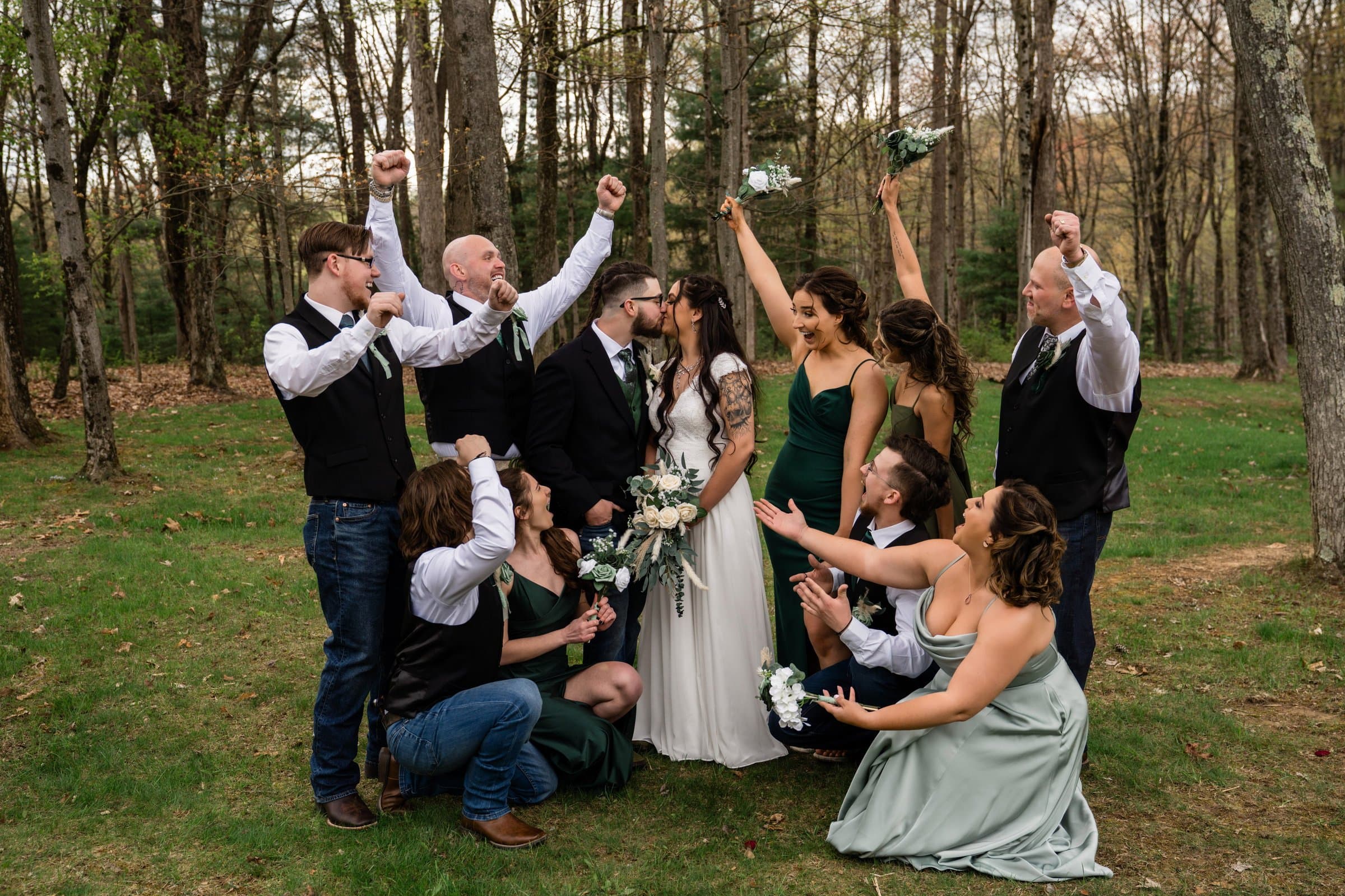
No. A wedding videographer is not a requirement, and plenty of couples finish the year with photos only and never think about it again. But if the budget reaches both, video is the second thing we would add, ahead of almost any other upgrade, because it is the only one that keeps the sound of the day.
We photograph weddings. We do not film them, and we have no video package to sell you, which is most of the reason this is worth reading from us instead of from a film company. Below is what each one catches, what having both costs you in coordination, and how couples who can only book one tend to decide.
What video holds that photographs cannot
Sound. That is most of the answer, and it is a bigger answer than it looks.
Your vows in your own voices, at the speed you said them. The pause before the third line. A father getting two sentences into a toast and stopping. The room laughing at a joke you missed because somebody was hugging you. A grandparent's voice, which is the one couples name most often and the hardest to get any other way.
Then motion. A photograph of the recessional is the recessional. A clip of it is the walk, the length of it, and the noise. The first dance becomes a dance rather than four frames of a dance. Reading a room's energy off a still takes a little imagination; video hands it over.
What photographs hold that video cannot
An object. A photograph turns into a print, a wall, an album on a shelf, something handed across a kitchen table. Nothing in a wedding film does that, which is why a printed album outlasts the file it came from.
There is also the press-play problem. A highlight film runs five to eight minutes and asks for a decision before it starts. A photograph asks for nothing. That is why the photos get looked at in year four and year fifteen, and why the frames on other people's walls are all stills.
Pulling stills out of footage is not a workaround. Film is usually shot near 1/50 of a second so motion looks smooth, and a frame lifted out of that carries the blur with it. Resolution is lower than a stills file. And nobody was waiting for the expression. The camera was rolling. A grab from footage records that something happened; it is not the frame you hang.
| What you want | Photos | Video |
|---|---|---|
| Your vows and toasts word for word | No | Yes |
| Something to frame and hang | Yes | No |
| Looked at without pressing play | Yes | No |
| The energy of a packed dance floor | Partly | Yes |
| An album for a shelf | Yes | No |
| Something to send relatives who could not come | Yes | Yes |
How many couples hire a wedding videographer?
Far fewer than hire a photographer. The Knot's 2026 Real Weddings Study, built on 10,474 US couples married during 2025, found 88 percent hired a photographer. The Knot's videography data puts videographers at roughly 37 percent. WeddingWire's Newlywed Report, from 27,250 responses by people married in 2019, found 89 percent hired a photographer and that photography was the line couples most often added money to, at 47 percent.
You will also meet a much louder number: 98 percent of brides regret skipping video. Zola's own guide credits it to the Huffington Post, and the trail stops there. No study, no sample size, no year. A 94 percent version circulates with the same problem. Both get repeated constantly, almost always by someone who sells video.
Couples do tell us they wish they had video, and we believe them. It simply has not been measured, and a statistic with nothing underneath it is a poor reason to spend money. The useful question is the one nobody can answer for you: in five years, which of the two would you go looking for?
If you can only book one
Photography, and we would say that in any line of work. Stills are what family asks for, what ends up in frames on other people's walls, what an album is made of, and what still works when the laptop is three devices ago. The hiring numbers reflect it.
There is a genuine case for flipping that, and it is not a consolation prize. If the part you are most looking forward to is hearing what the two of you say to each other, video first is the right call. If one of you has a parent or a grandparent whose voice is the thing you want kept, same answer. Those are good reasons and we would not argue anyone out of them.
One caution about the tempting middle option. A single company offering photo and video works when it is two operators doing two jobs. One person alternating between a stills camera and a gimbal is splitting attention across moments that happen once, and the photographs are usually where the compromise shows. The same question sits underneath whether a wedding gets one photographer or two: how many pairs of eyes are on the day, and what each pair is responsible for.
How a photographer and a videographer share a wedding day
This is the part the comparison articles skip, and it decides whether both teams do their best work or spend the day in each other's frames. Every wedding is different. The friction points are the same four.
The ceremony
Both teams want the identical clean angle on two faces, and only one of them can move. Video usually takes fixed positions and holds them: a camera at the back of the aisle on a tripod, a second locked off to one side, sometimes a third near the front. They cannot cut around a person walking through a shot. So photographers move, quietly, and work around those fixed cameras. That division is the industry norm, and a video team who will not say where their cameras go before the processional is telling you something.
The audio rig wants floor space too. A lapel mic on the officiant, a recorder at the sound board, a shotgun mic on a stand near the front. That stand wants the same corner a photographer's light stand wants in a dark church. Two minutes of conversation before guests are seated settles all of it. Our own default during a ceremony is no flash at all, which takes one conflict off the table before it starts; the reception is where lighting really gets negotiated.
Churches add a layer. Plenty of them restrict where any vendor may stand during a ceremony, sometimes to one spot at the back or a balcony, and the restriction applies to both teams equally. One question to the officiant beats two vendors guessing.
Portraits, and the gimbal problem
The most common collision of the day, and it is structural rather than anybody's fault. A gimbal operator needs continuous movement. They walk the two of you, or they walk around you. We need the opposite: chin down, weight on the back foot, hold it there. Opposite instructions, same two people, same minute.
Alternating fixes it, and it costs nothing when it is agreed before the block rather than during it. A few minutes of walking for video while we reset, then a hold for stills while they reposition. All the couple has to do is follow whoever is talking.
Lighting at the reception
Here the two crafts want different things. Flash fires for a fraction of a second and is gone. Video needs light that stays on, which in a dark barn or a low-ceilinged hall usually means an LED panel.
The flash is rarely the problem. The constant light is. A video light on a couple during the first dance sets the color temperature of every photograph taken in that direction, whether we chose it or not, and it arrives from wherever the operator is standing rather than from where we would have put it. It gets handled by gelling to match it, or by agreeing one direction and leaving it there. That conversation goes better over dinner than at the first note of the first dance.
Floor space is the other one. Two teams on a single dance floor means four or more light stands around an area guests will fill within about ninety seconds of the dancing starting. Sandbags, and stands tucked behind something rather than standing in the open. If the DJ is running a fog machine, both teams want to know before they rig, because haze does lovely things to a backlight and ruins a fill.
Does a video team add time to the timeline?
Mostly no, as long as the two coverage windows sit in the same place. Hours that match on paper mean nothing if one team starts an hour later and finishes an hour later, so that is the first thing worth settling. Three things do add time:
- Interviews or letter reads. Some films are built around a morning sit-down, or each of you reading a letter to camera. That is a genuine block on a morning already carrying about 90 minutes of details and getting ready.
- Drone. It needs a window with nobody underneath it, plus venue permission. The FAA requires a Part 107 remote pilot certificate for anyone flying a drone for work.
- A gimbal walk during portraits. A 30-minute couple portrait block absorbs one comfortably. A golden hour pull-away of 15 to 20 minutes does not, especially once the walk out to the spot is counted. If a film needs a long walking shot, the portrait block is where it belongs.
Past that, a second team does not slow a day down. It does mean four people making independent calls about the same rooms, which is a coordination question rather than a timing one, and it is why a written timeline everyone has a copy of earns its keep harder on a photo-and-video wedding than on any other kind.
What to ask a wedding videographer before booking
Seven questions, in the order we would ask them.
- The coverage window, not the hour count. Ten hours is a number. Twelve forty-five to ten forty-five is a plan.
- How many people are filming, and whether they split up during getting ready.
- What gets delivered, and when. Highlight film length, whether the full ceremony and the speeches come as separate files, whether raw footage is available, and the turnaround in writing. Industry turnaround runs anywhere from about six weeks to six months.
- How they capture audio. Lapel mic, board feed, shotgun, or all three, and what the backup is if one fails. Bad audio is the one thing nobody can fix later.
- Reception lighting. What they bring, where it usually goes, and whether they will talk it through with the photographers ahead of the day.
- Drone. Whether they fly, whether they hold a Part 107 certificate, and whether your venue allows it.
- Whether they would like a copy of the photography timeline. A yes is the strongest signal on this list.
If video does not fit the budget
Three middle options, with the honest limit on each.
A content creator is a different job from a videographer: vertical clips shot on a phone, turned around in a day or two, made for posting. Zola's 2026 First Look Report, surveying more than 11,500 couples, found 21 percent planning to make their own social content and 40 percent asking their photographers and videographers for social-first clips alongside the traditional work. Good for what it is. It is not a film, and the audio is the first thing to give.
A phone on a tripod with one person assigned to press record will get you the vows. Sound is the weak point, and it improves enormously when the phone sits near the front rather than at the back. If your ceremony is unplugged, naming that one exception to your officiant keeps anyone from shushing your uncle.
Some videographers sell a short package covering the ceremony and the toasts only. Those are the parts couples most often say they want to hear again, and it is the cheapest honest version of video there is.
Frequently asked questions
Do you need both a wedding photographer and a videographer?
No. Photography is close to universal, at 88 percent of couples in The Knot's latest study, while video sits near 37 percent. Both is better if the budget carries both, because they keep different things. Neither one is a substitute for the other.
Can one person shoot photo and video at a wedding?
One company can, with two operators doing two jobs. One person alternating between a stills camera and a video rig is dividing attention across moments that happen once, and the still photographs are usually where the compromise shows up.
Will a videographer get in the way of the photos?
Not when positions and lighting are agreed beforehand. The friction points are predictable: the clean angle at the ceremony, a gimbal during portraits, and a constant video light at the reception setting the color of the room. All three come out of a short conversation, and most video teams are glad to have it.
Does having a videographer mean fewer photos?
No. Coverage runs on hours and blocks, not on how many vendors are in the room. What changes is the feel of the portrait block, since alternating with a gimbal makes it busier. Planning the alternation in advance keeps the pace where it would have been.
Is a wedding videographer worth it?
If hearing the day again matters more to you than an extra hour of coverage or an upgraded album, yes. If neither of you has ever rewatched a video of anything, that is worth knowing about yourselves. The couples happiest with their film are the ones who wanted the sound, not the ones a statistic talked into it.
What we tell couples who ask
Photos first, video second, and video ahead of most of the things people upgrade before it. If a film team is already booked, we would far rather have their details early than meet them in a doorway on the morning of the wedding. Tell us what you are weighing up and we will give you a straight answer about the timeline either way.